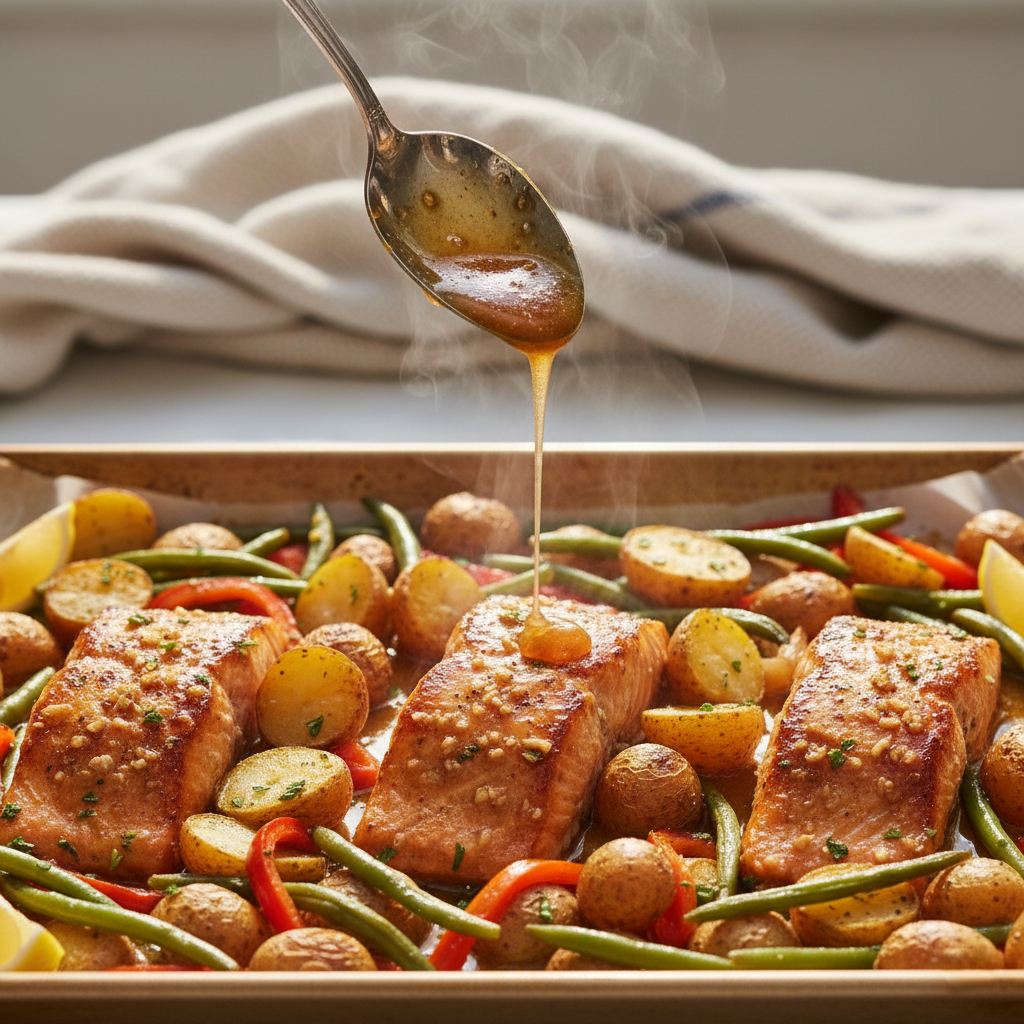
Enjoy a healthy, fuss-free dinner with succulent salmon fillets generously glazed in a sweet and savory honey garlic sauce that caramelizes beautifully during baking. They’re surrounded by an array of colorful seasonal vegetables roasted to golden perfection. This one-pan wonder is the ultimate solution for hectic weeknights, delivering the Cardiovascular benefits of omega-3 fatty acids alongside restaurant-quality flavor without hours in the kitchen.
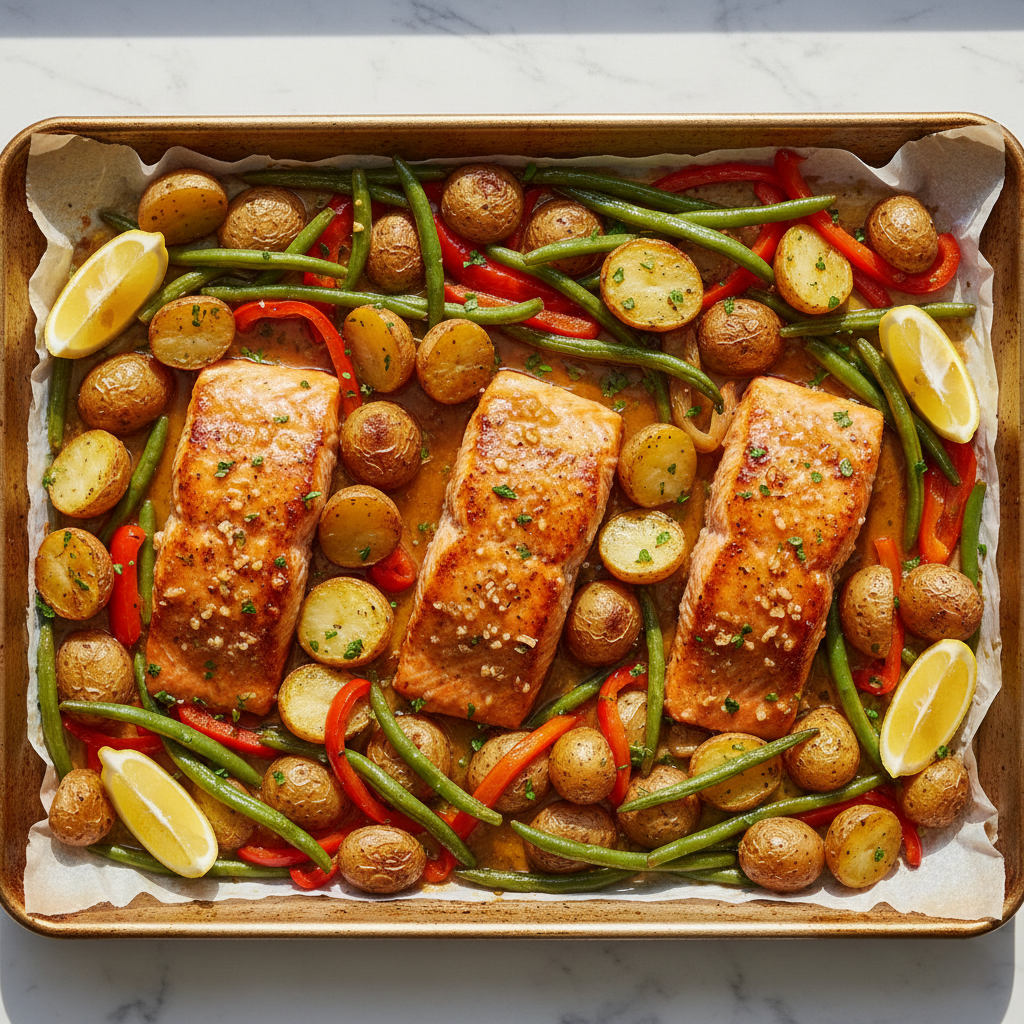
Table of Contents
Why This Recipe Works
Sheet pan meals masterfully combine bold flavors with wholesome nutrition in the simplest format, dramatically reducing cleanup. The honey garlic glaze transforms as it bakes, creating a glossy coating while infusing the vegetables with savory-sweet depth. This meal comes together in under 40 minutes, making it ideal for busy nights. If you enjoy this low-stress cooking style, be sure to try our Sheet Pan Greek Chicken next for another effortless weeknight win.
Ingredients You’ll Need
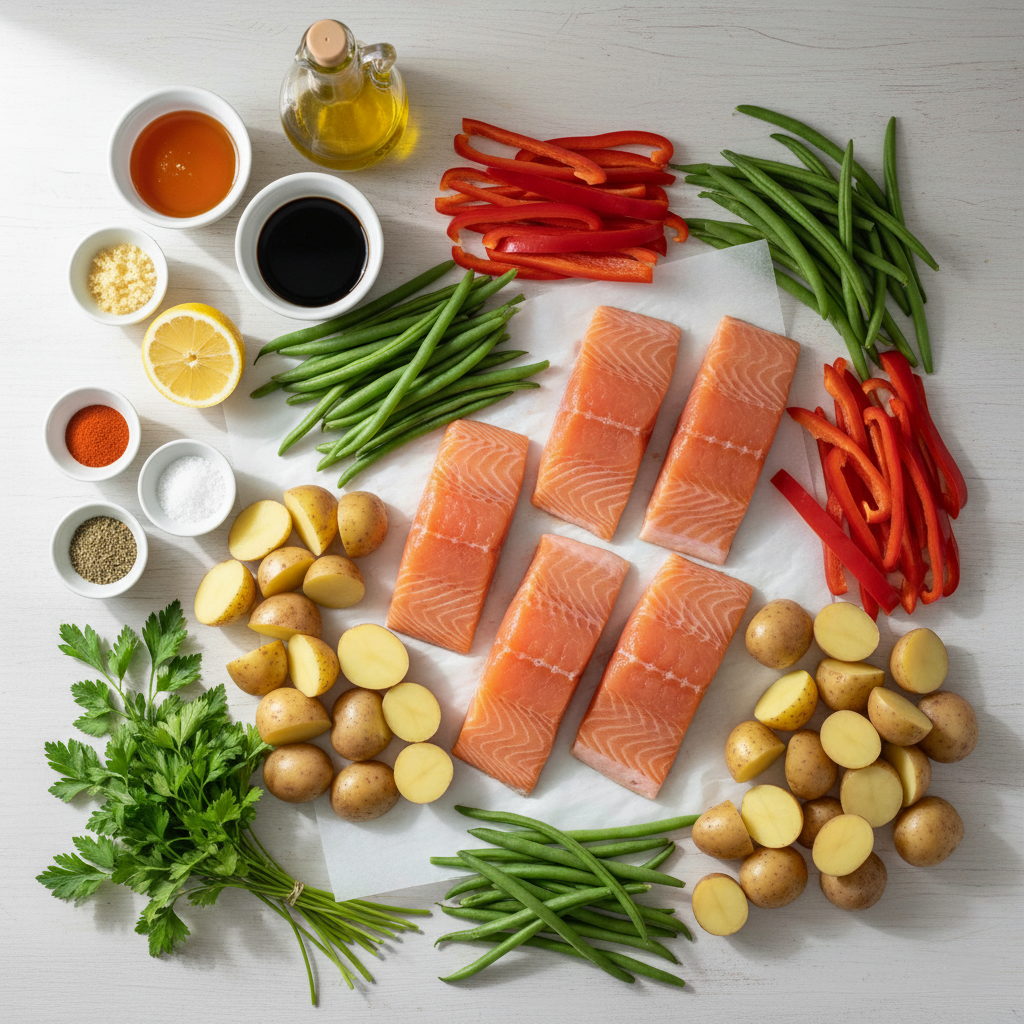
Salmon
- 4 salmon fillets (about 150g/5.3 oz each), skin-on or skinless, patted dry for best glaze adhesion
- 1 tablespoon extra-virgin olive oil, for brushing the fillets
- Kosher salt and freshly ground black pepper, to taste
Honey Garlic Glaze
- 2 tablespoons good-quality honey (local preferred for best flavor)
- 2 tablespoons low-sodium soy sauce or gluten-free tamari
- 2 cloves garlic, finely minced or grated (use a microplane for smoothest texture)
- Fresh juice of ½ lemon (about 1-2 tablespoons), plus zest if desired
- ½ teaspoon smoked paprika (optional, adds incredible depth and smokiness)
- ½ teaspoon dried oregano or 1 tablespoon chopped fresh dill (dill pairs beautifully with salmon)
Veggies
- 1 lb (450g) baby potatoes, halved lengthwise (Yukon Gold or red work best)
- 8 oz (225g) fresh green beans, trimmed, or quick-cooking alternatives like broccoli florets, zucchini chunks, or asparagus spears
- 1 large red bell pepper, seeded and sliced into ½-inch wide strips
- 1-2 tablespoons extra-virgin olive oil for roasting
- Kosher salt and freshly ground black pepper, to season generously
Equipment Needed
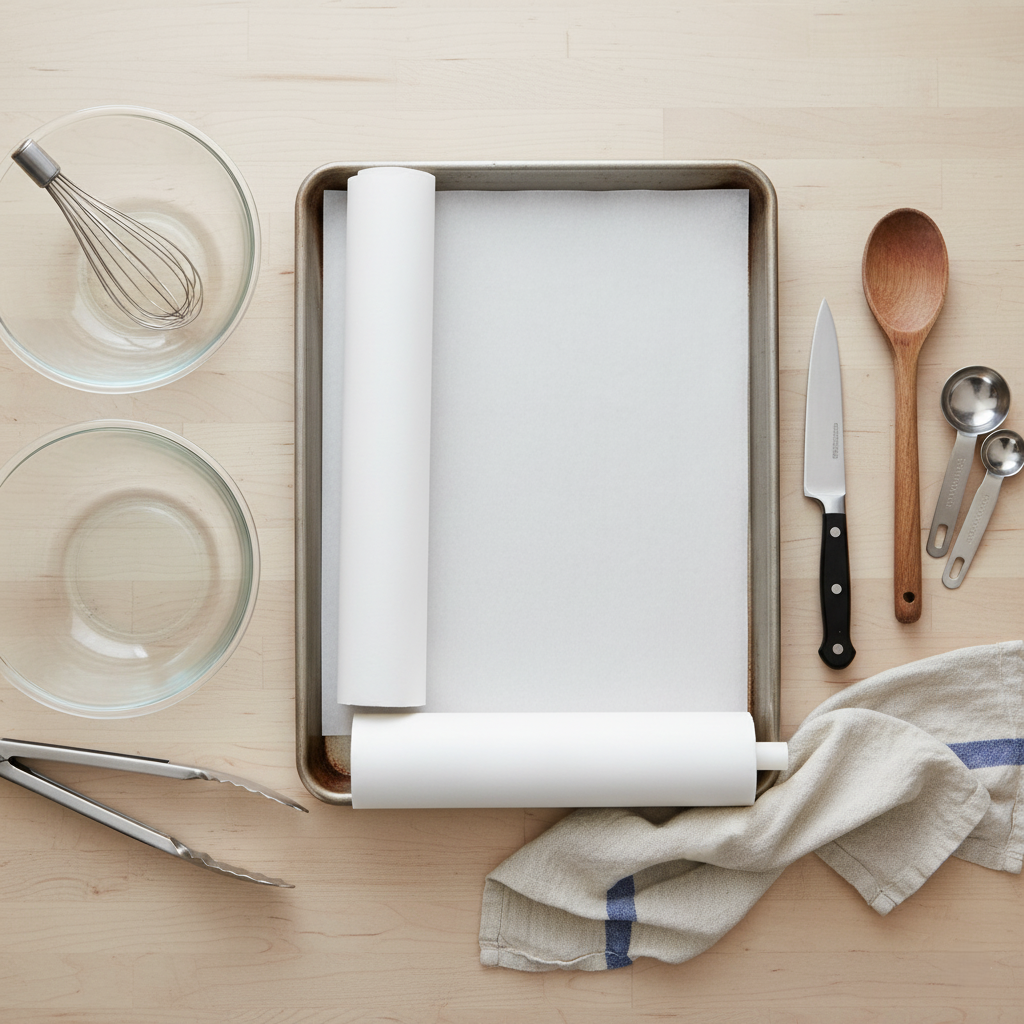
- Large rimmed sheet pan (18×13 inches works perfectly)
- Medium mixing bowls for glaze preparation and vegetable tossing
- Whisk, fork, or small spatula for glaze emulsification
- Parchment paper or aluminum foil (optional but recommended for easiest cleanup)
- Sharp chef’s knife and sturdy cutting board
- Tongs, fish spatula, or wide metal spatula for easy pan handling
Step by Step Instructions
1. Prepare the Honey Garlic Glaze
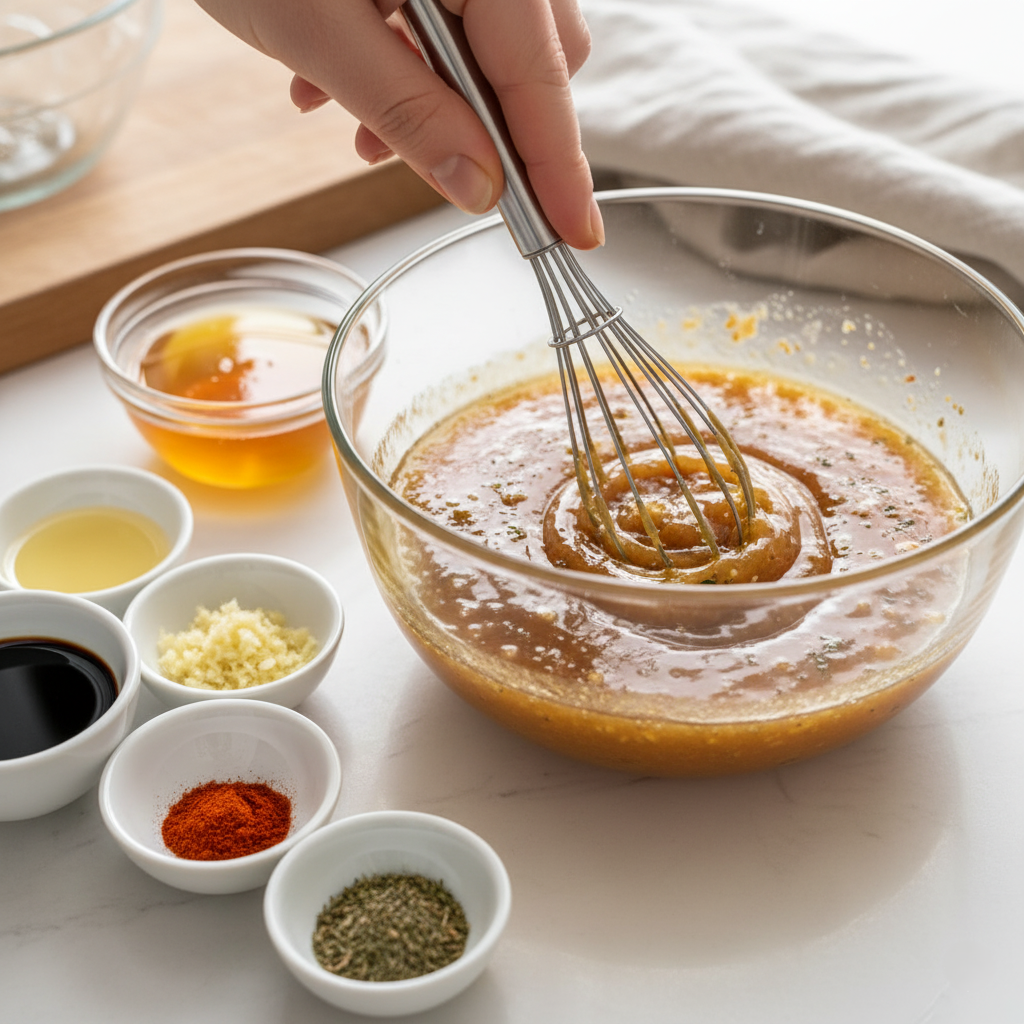
In a small bowl, combine 2 tablespoons honey, 2 tablespoons low-sodium soy sauce (or tamari), 2 finely minced garlic cloves, juice from ½ lemon, ½ teaspoon smoked paprika (if using), and ½ teaspoon dried oregano or 1 tablespoon chopped fresh dill. Whisk vigorously for 30-45 seconds until the mixture emulsifies slightly and all ingredients are thoroughly combined—the garlic should be evenly distributed and the honey fully dissolved into a glossy, pourable glaze. Taste and adjust seasoning if needed, then set aside at room temperature while you prep the remaining ingredients; this allows the flavors to meld beautifully.
2. Prep and Pre-Bake Potatoes
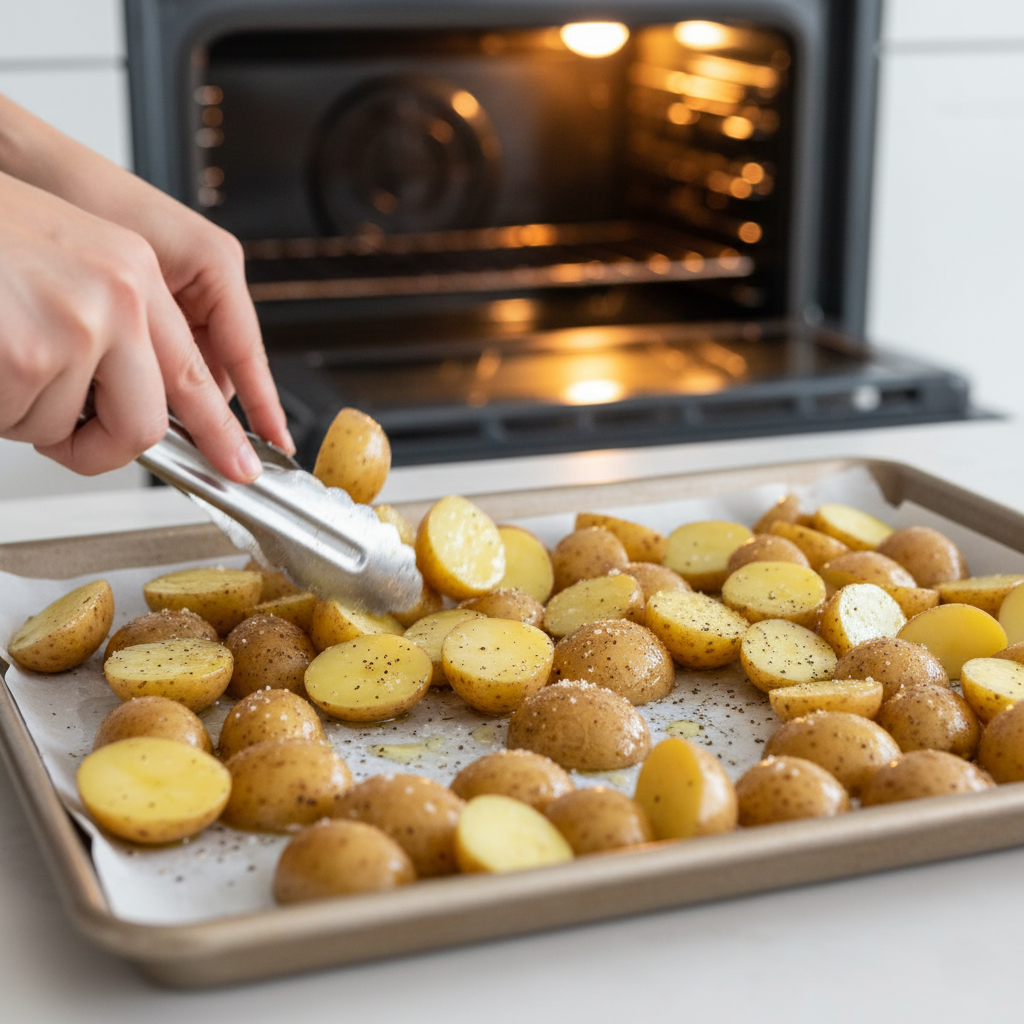
Position a rack in the center of your oven and preheat to 400°F (200°C)—this temperature perfectly balances crispy vegetable exteriors with tender interiors. Line your large rimmed sheet pan with parchment paper or foil if desired, then scatter the halved baby potatoes directly onto the pan. Drizzle with 1 tablespoon olive oil, sprinkle generously with kosher salt and black pepper, then use clean hands or tongs to toss thoroughly until every potato surface glistens with oil and seasoning. Spread into a single layer and roast for 10-12 minutes until the cut sides begin to turn golden and the potatoes yield slightly to gentle pressure but still hold their shape.
3. Add Veggies
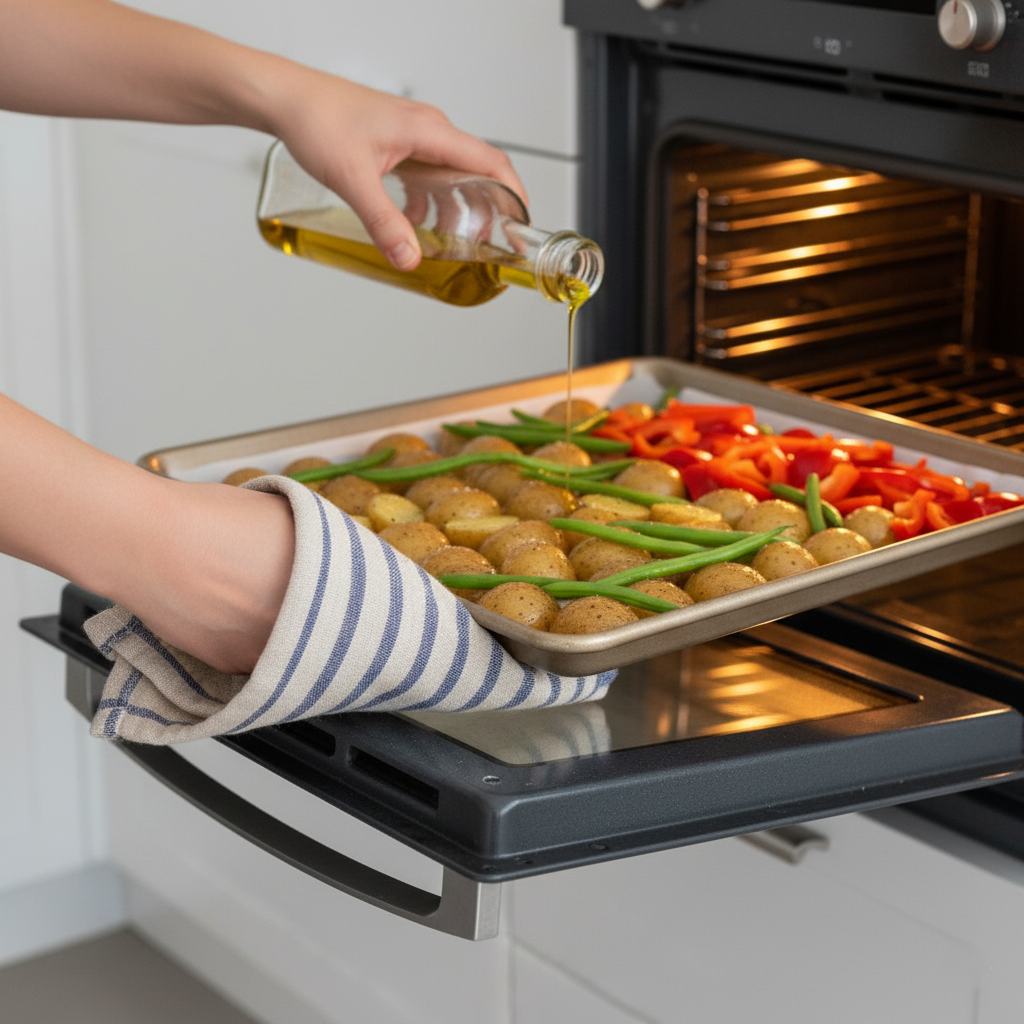
Carefully remove the hot sheet pan from the oven using oven mitts. Working quickly while the pan is still hot, scatter the trimmed green beans and sliced red bell pepper strips evenly around the partially-roasted potatoes. Drizzle with an additional 1 tablespoon olive oil, season generously with kosher salt and freshly ground black pepper, then use tongs or a spatula to gently toss and redistribute all vegetables, ensuring everything remains in a single layer with good exposure to hot pan surface for maximum caramelization.
4. Arrange Salmon & Glaze
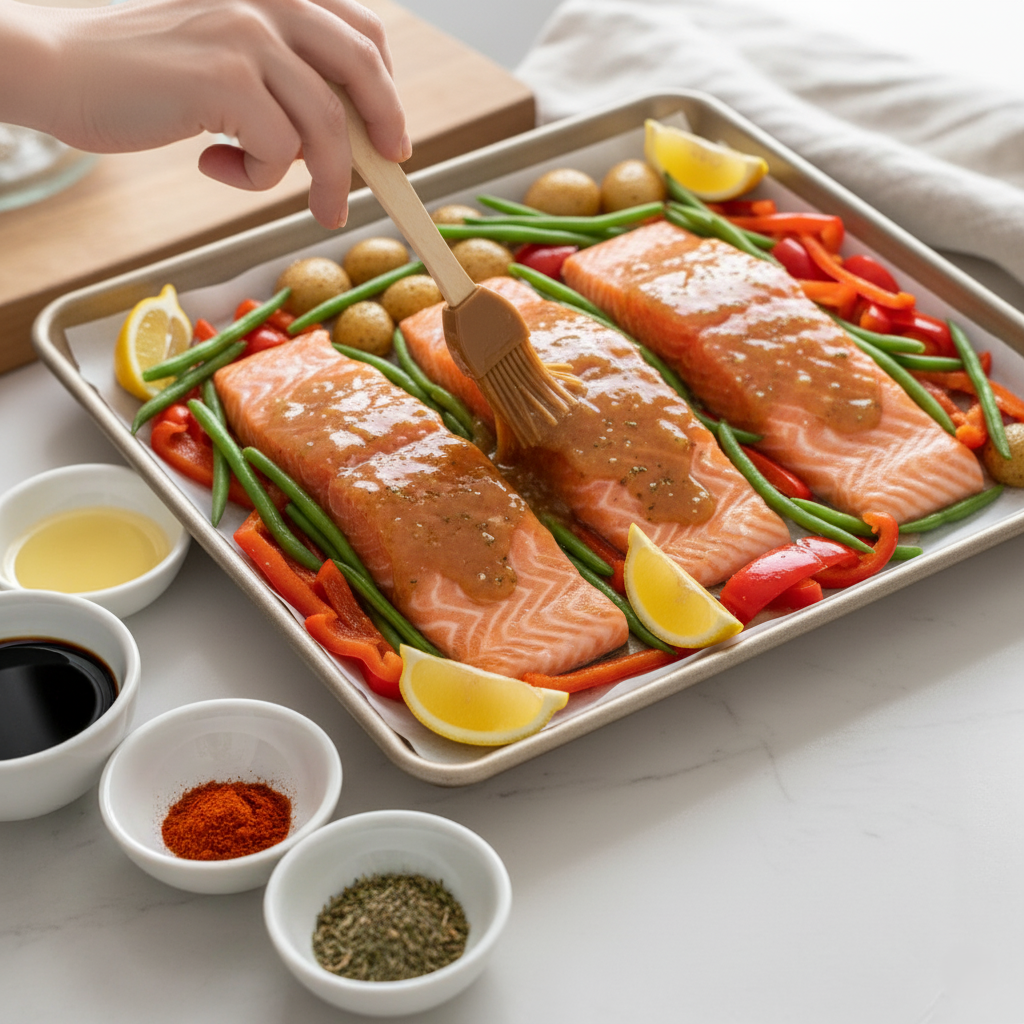
Nestle the salmon fillets skin-side down (if skin-on) into the center of the crowded vegetable bed, gently pushing veggies aside to create space. Using a pastry brush or the back of a spoon, generously coat the top surface and exposed sides of each fillet with your prepared honey garlic glaze, using about ¾ of the total glaze and reserving the rest. If desired, tuck thin lemon wedges from the zested half-lemon around the pan edges for subtle citrus aroma during roasting.
5. Roast to Perfection
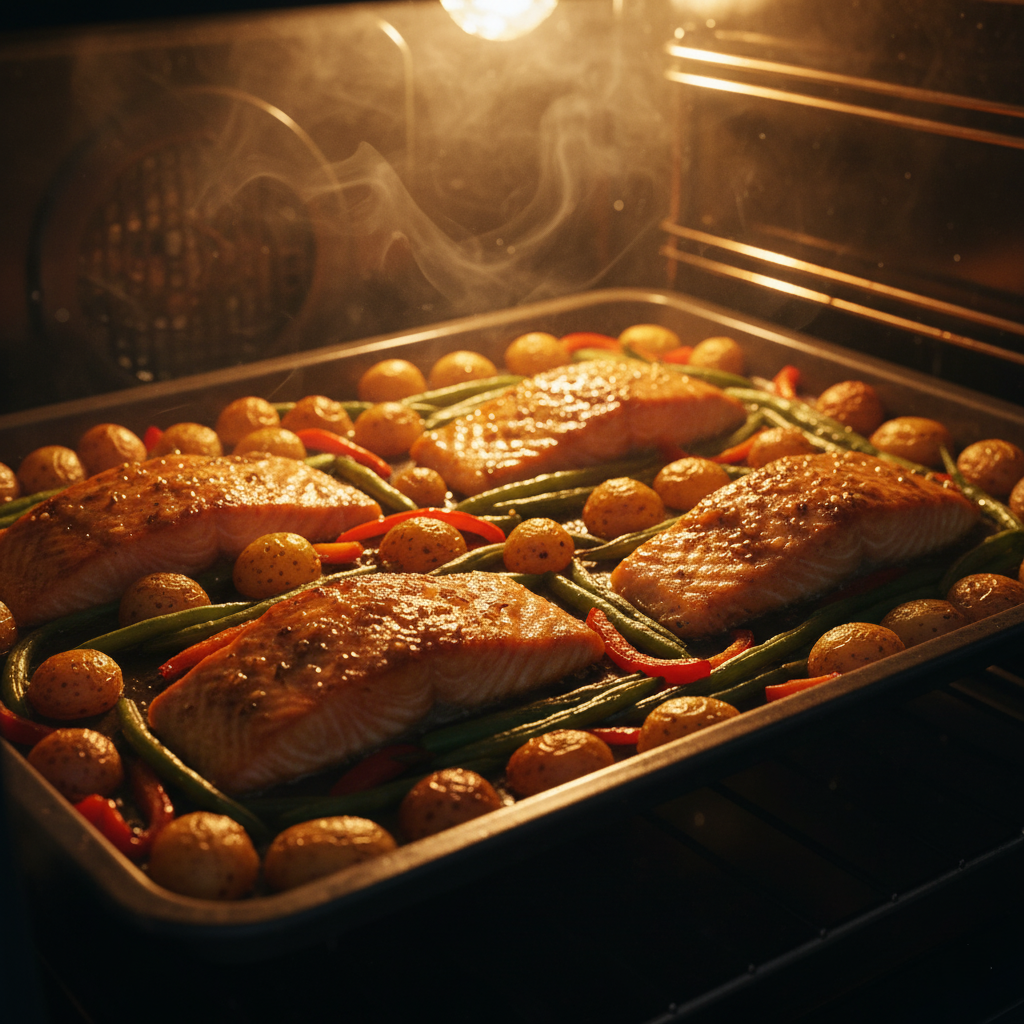
Return the fully loaded sheet pan to the center oven rack and continue roasting for 12-15 minutes, rotating the pan 180° halfway through for even cooking. Watch for doneness cues: the salmon edges will caramelize to deep golden brown, the flesh turns opaque and flakes easily when gently pressed with a fork (internal temperature reaches 145°F/63°C), and vegetables achieve crispy, charred edges with tender-crisp centers. Remove immediately to prevent overcooking—the residual heat will carry over for perfect results.
6. Serve & Enjoy
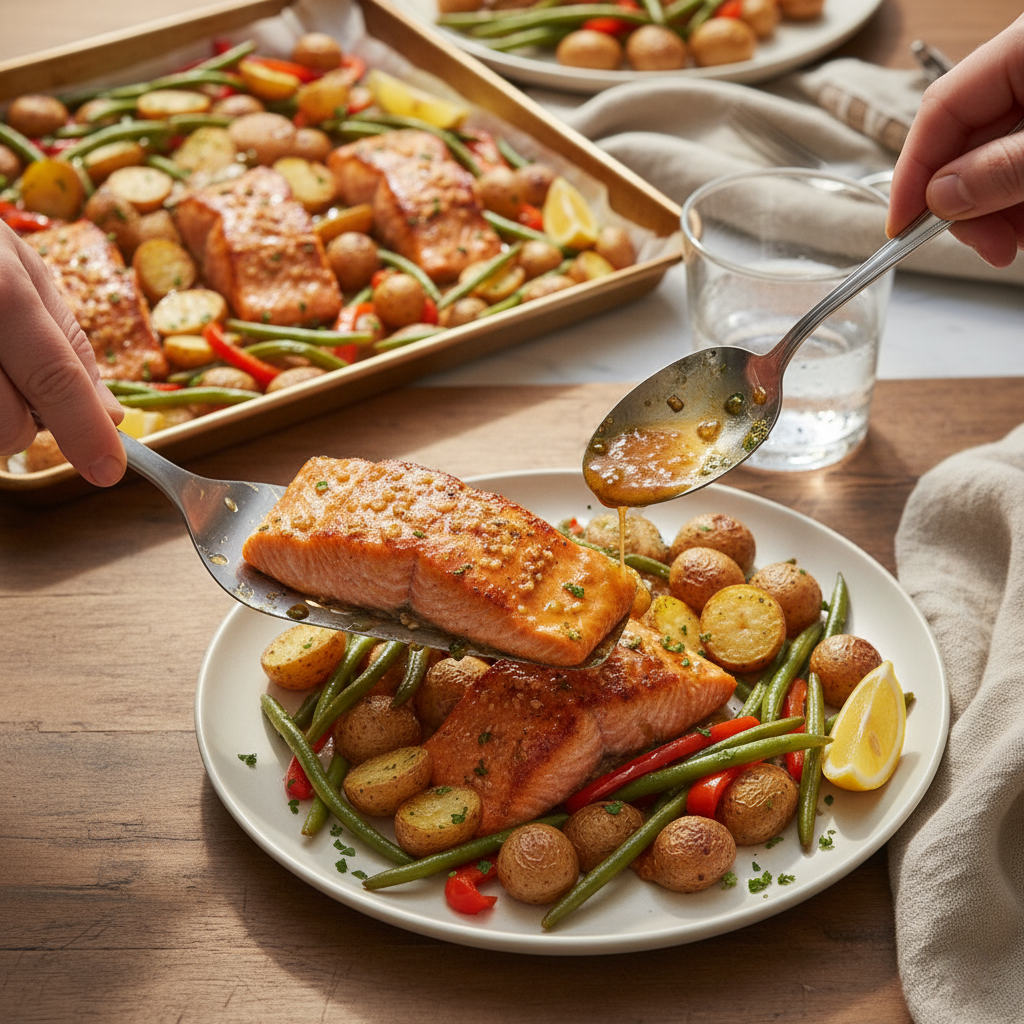
Transfer to a large serving platter or divide directly onto warmed dinner plates, ensuring each portion includes one salmon fillet surrounded by an ample serving of roasted vegetables. Spoon any precious browned pan juices and remaining glaze over each serving for maximum flavor concentration. Garnish with freshly chopped parsley, dill, thin lemon wedges, sesame seeds, or sliced green onions just before serving—serve immediately while piping hot for the best texture and flavor experience.
Tips & Variations
- Substitute pure maple syrup for honey if you prefer a richer, more complex sweetness profile.
- Line your sheet pan with heavy-duty aluminum foil sprayed with cooking spray for virtually effortless cleanup.
- Finish each serving with a generous squeeze of fresh lemon juice right before eating to brighten all the savory elements.
- Sprinkle toasted sesame seeds and thinly sliced green onions over the finished dish for crunch and visual appeal.
- Make double the glaze recipe and reserve half warm in a small bowl for generous table-side drizzling.
FAQs
Q: Can I use frozen salmon?
A: Absolutely—thaw completely in the refrigerator overnight, then pat thoroughly dry with paper towels to remove excess moisture which prevents crispy glaze formation and proper seasoning adhesion.
Q: Which other veggies can I use?
A: Nearly any quick-roasting vegetable works beautifully: broccoli florets, asparagus spears, zucchini half-moons, rainbow baby carrots, or sugar snap peas. Adjust roasting times slightly based on thickness—asparagus takes less time, carrots need a few extra minutes.
Q: How do I tell if the salmon is done?
A: Perfectly cooked salmon appears opaque throughout with a slight translucency at the very center, flakes easily into large moist chunks when gently pressed with a fork (avoid aggressive poking), and registers 145°F (63°C) at the thickest part. The glaze should be deeply caramelized at the edges.
Q: How can I make this gluten-free?
A: Simply swap regular soy sauce for tamari, coconut aminos, or a certified gluten-free soy sauce alternative—the flavor profile remains virtually identical while ensuring complete gluten-free compatibility.
Conclusion
There is nothing quite like a dinner that tastes this indulgent but comes together with such ease. By incorporating this honey garlic salmon into your weekly rotation, you are treating your family to the powerful Cardiovascular benefits of omega-3 fatty acids in the most delicious way possible.
If you have fallen in love with the “one-pan” lifestyle and want to keep the easy clean-up streak going, be sure to add our zesty Sheet Pan Greek Chicken to your menu for next week. It packs the same punch of flavor and convenience that makes weeknight cooking a joy rather than a chore.