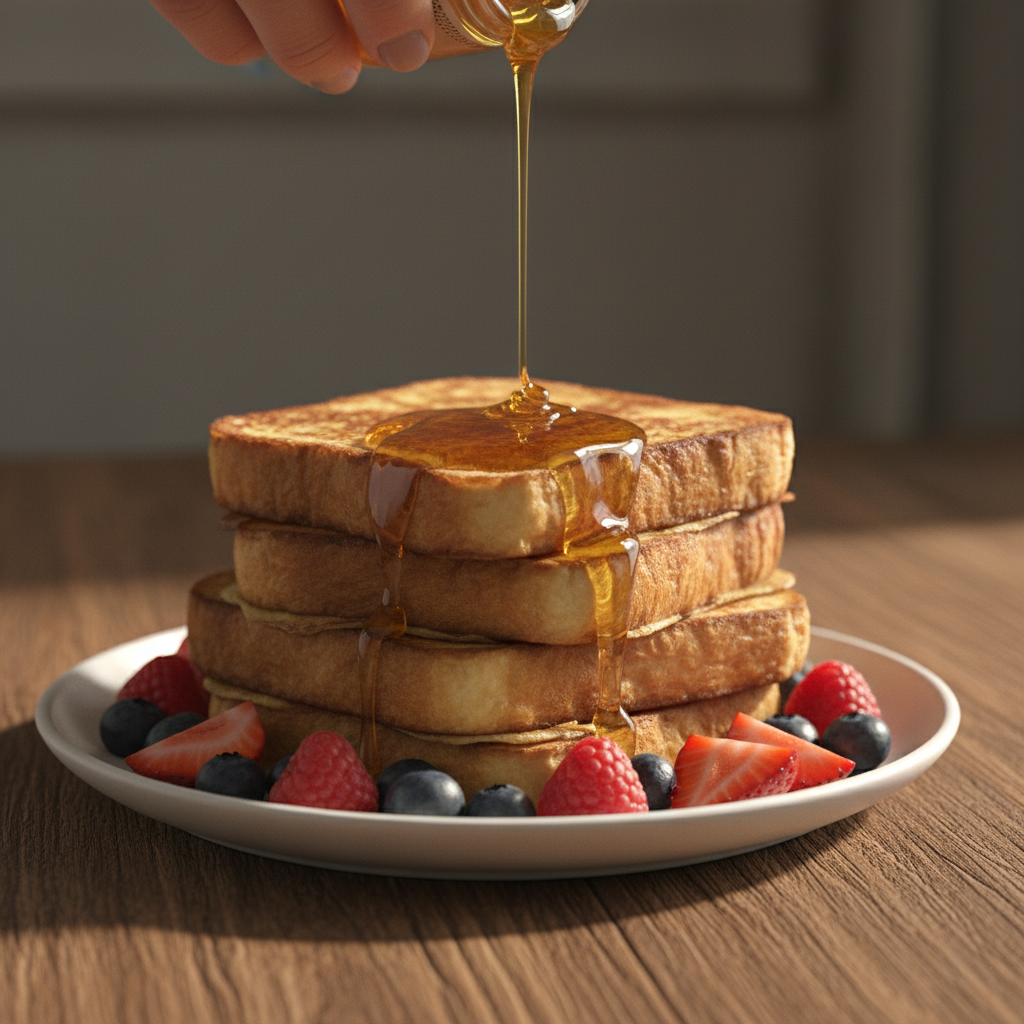
Looking for impossibly fluffy, golden French toast you can pull off fast? This recipe delivers breakfast perfection with just a handful of pantry staples and a few pro tricks for extra flavor and texture. In under 15 minutes total, you’ll create restaurant-quality French toast with crisp golden exteriors, tender custard-soaked centers, and that irresistible buttery aroma that fills the kitchen.
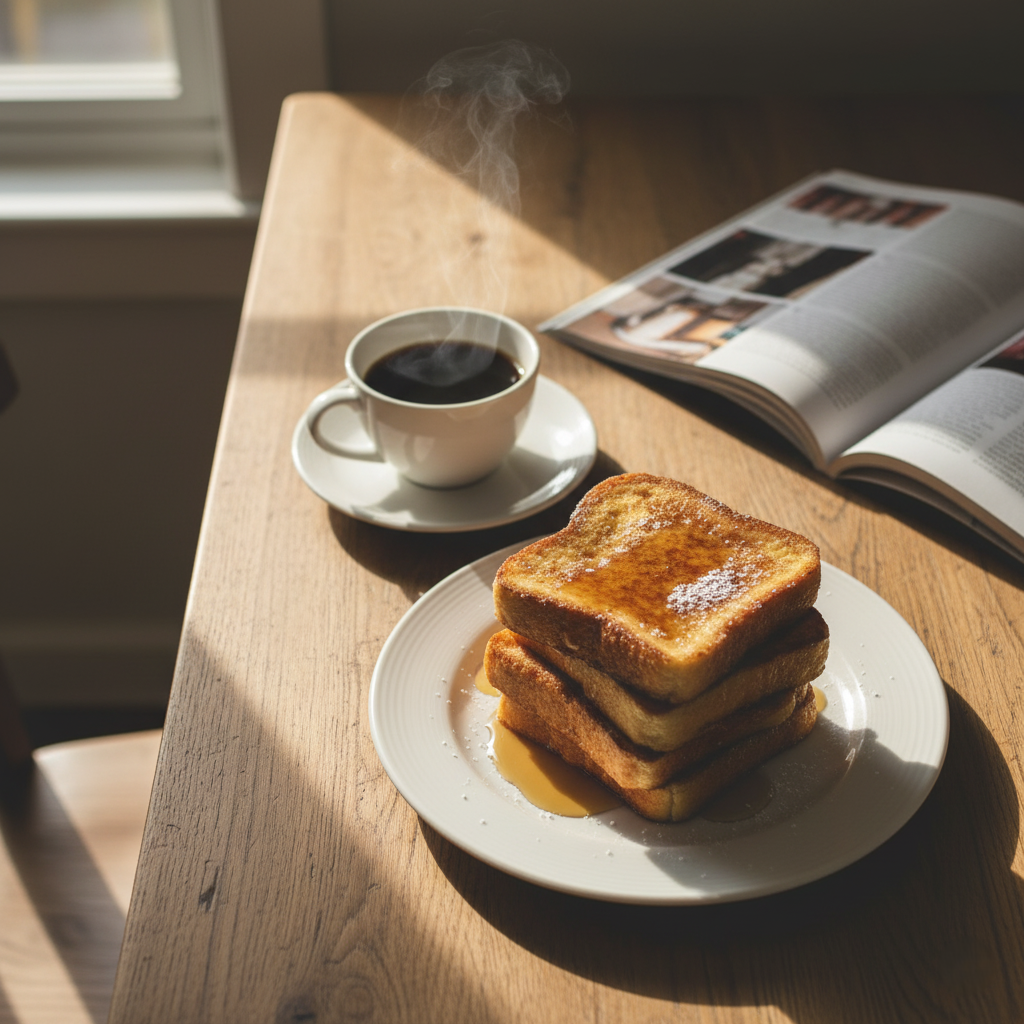
Why You’ll Love This French Toast
This French toast achieves perfect texture contrast—crisp golden exteriors from precise medium-low cooking meet luxuriously creamy, custard-like centers through optimal egg-milk ratios and soak timing. Unlike soggy diner versions or dry home attempts, this method uses sturdy breads that absorb without disintegrating, while cinnamon-vanilla-sugar custard delivers classic depth. Perfect for 5-minute busy mornings, impressive family brunches, or lazy weekend breakfasts, it works with nearly any bread while brioche/challah yield richest results every time.
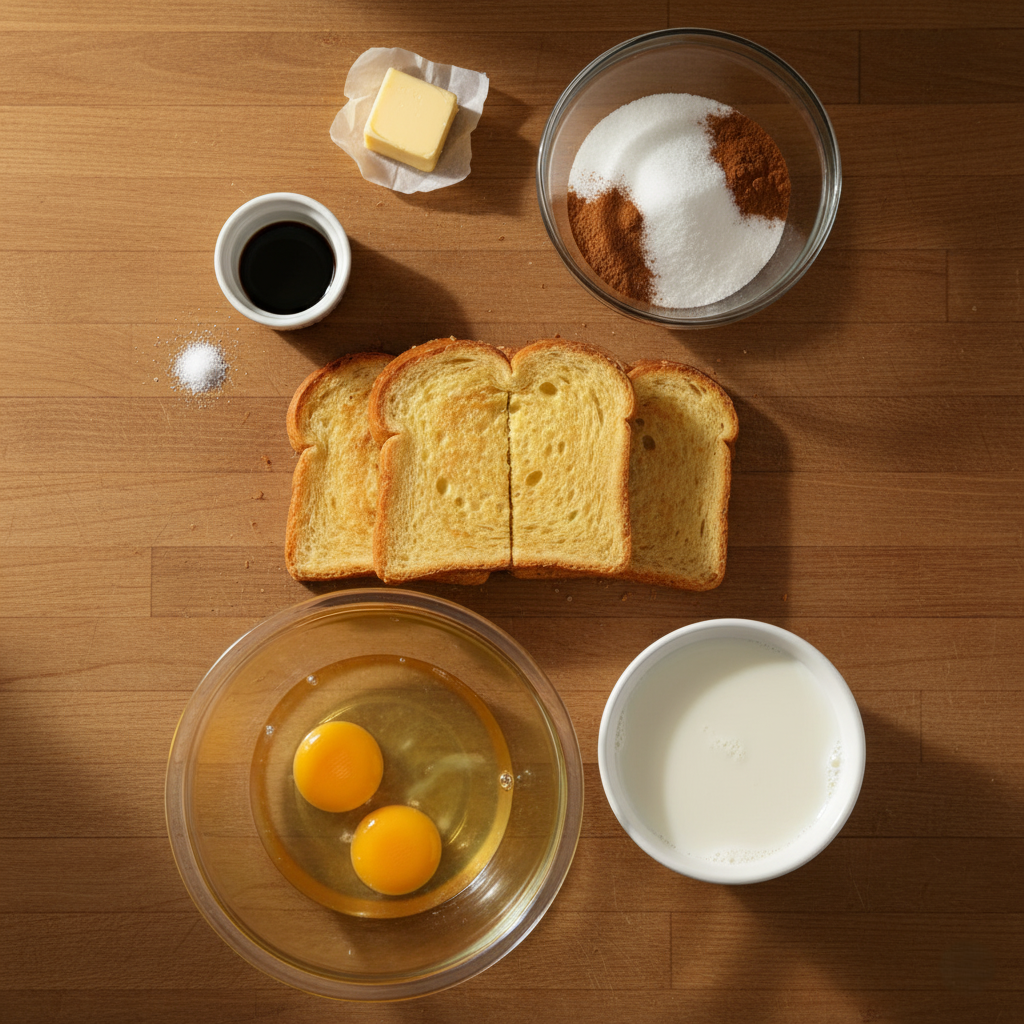
Ingredients
- 4 slices thick-sliced bread (brioche or challah preferred for buttery richness and structure)
- 2 large eggs (room temperature for smooth custard emulsion)
- 1/2 cup whole milk (provides creamy body without watering down flavor)
- 1 teaspoon pure vanilla extract (rounds flavors with floral warmth)
- 1/2 teaspoon ground cinnamon (warm spice backbone)
- 1 tablespoon granulated sugar (gentle sweetness, helps browning)
- Pinch of kosher salt (balances and intensifies flavors)
- 2-3 tablespoons unsalted butter (for rich skillet cooking)
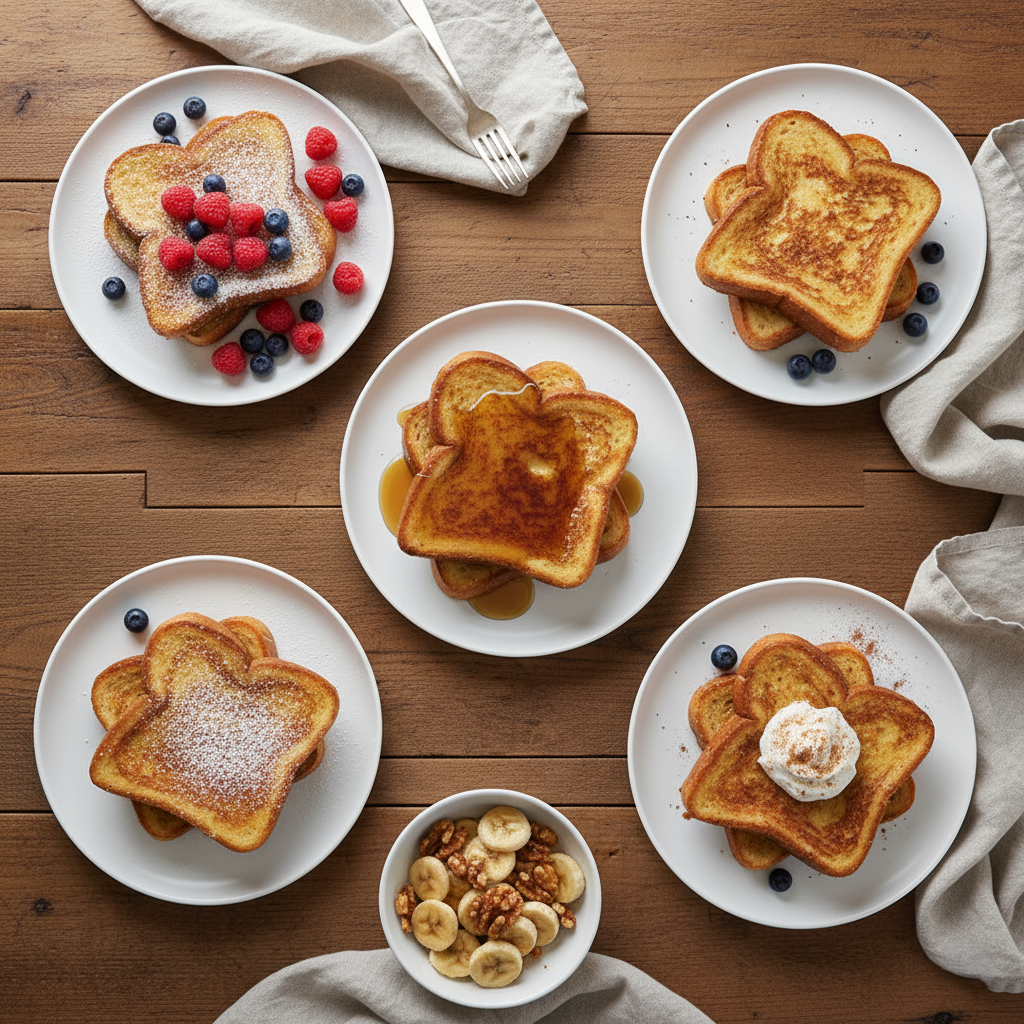
- Toppings: Pure maple syrup, fresh berries, powdered sugar, whipped cream
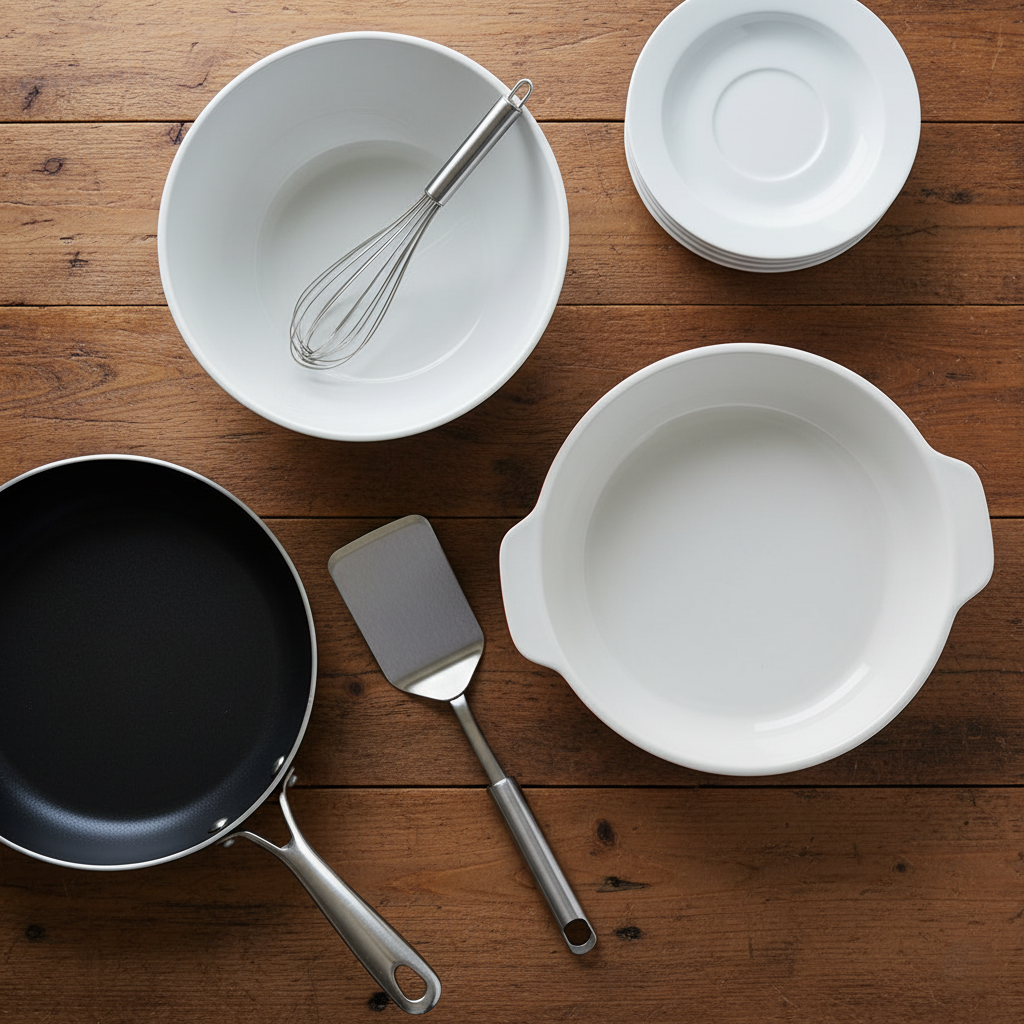
Essential Equipment
- Large mixing bowl (for thorough custard whisking)
- Wire whisk (creates smooth, aerated custard emulsion)
- Shallow baking dish or pie plate (perfect bread-soaking depth)
- 12-inch nonstick skillet or electric griddle (even medium-low heat)
- Thin metal spatula (precise flipping without tearing)
Step-by-Step Instructions
Step 1: Make the Custard
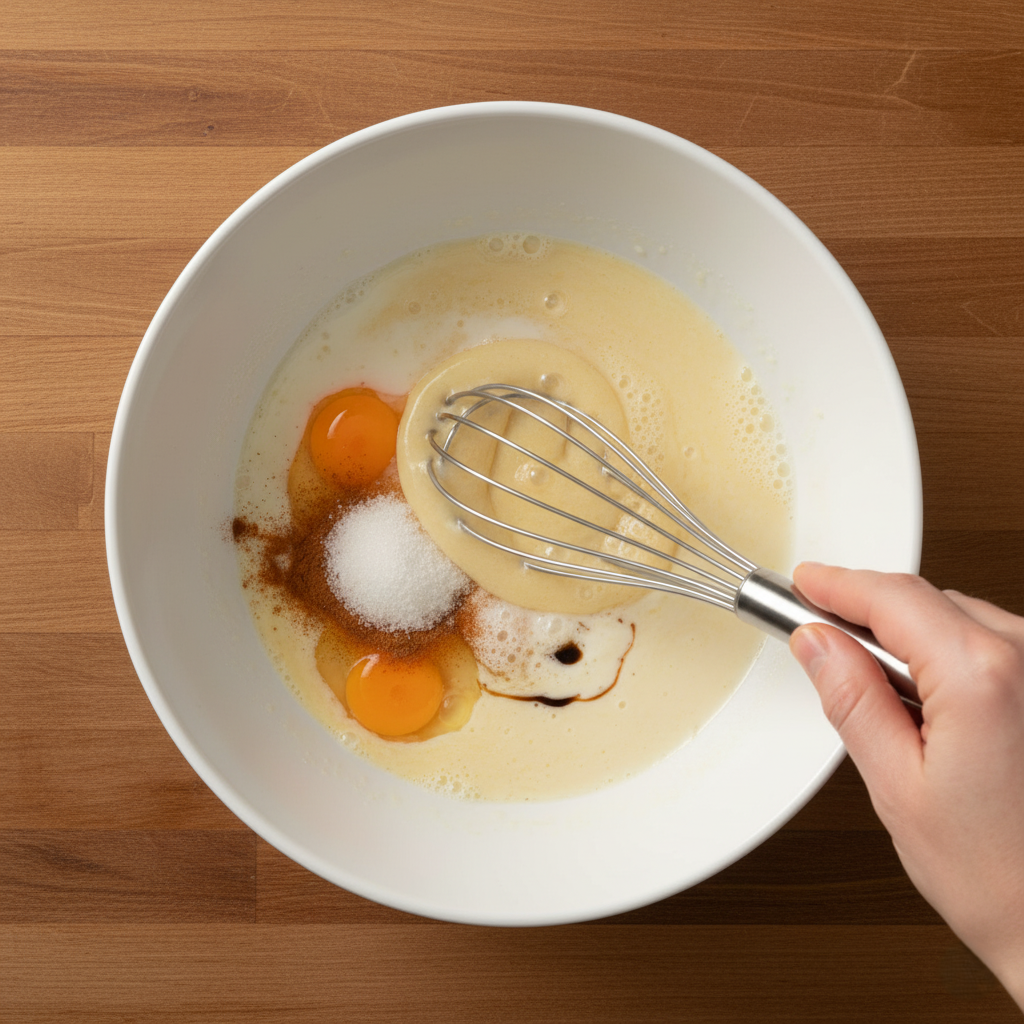
In large mixing bowl, crack 2 room-temperature eggs and whisk vigorously 20-30 seconds until smooth and pale yellow. Add 1/2 cup whole milk, 1 tsp vanilla extract, 1 tbsp sugar, 1/2 tsp cinnamon, and pinch kosher salt. Continue whisking 45 seconds until completely homogenous and slightly frothy—thorough mixing distributes fat/protein evenly for consistent soak and prevents watery streaks. Custard should thickly coat whisk tines and smell warmly aromatic before proceeding.
Step 2: Soak the Bread
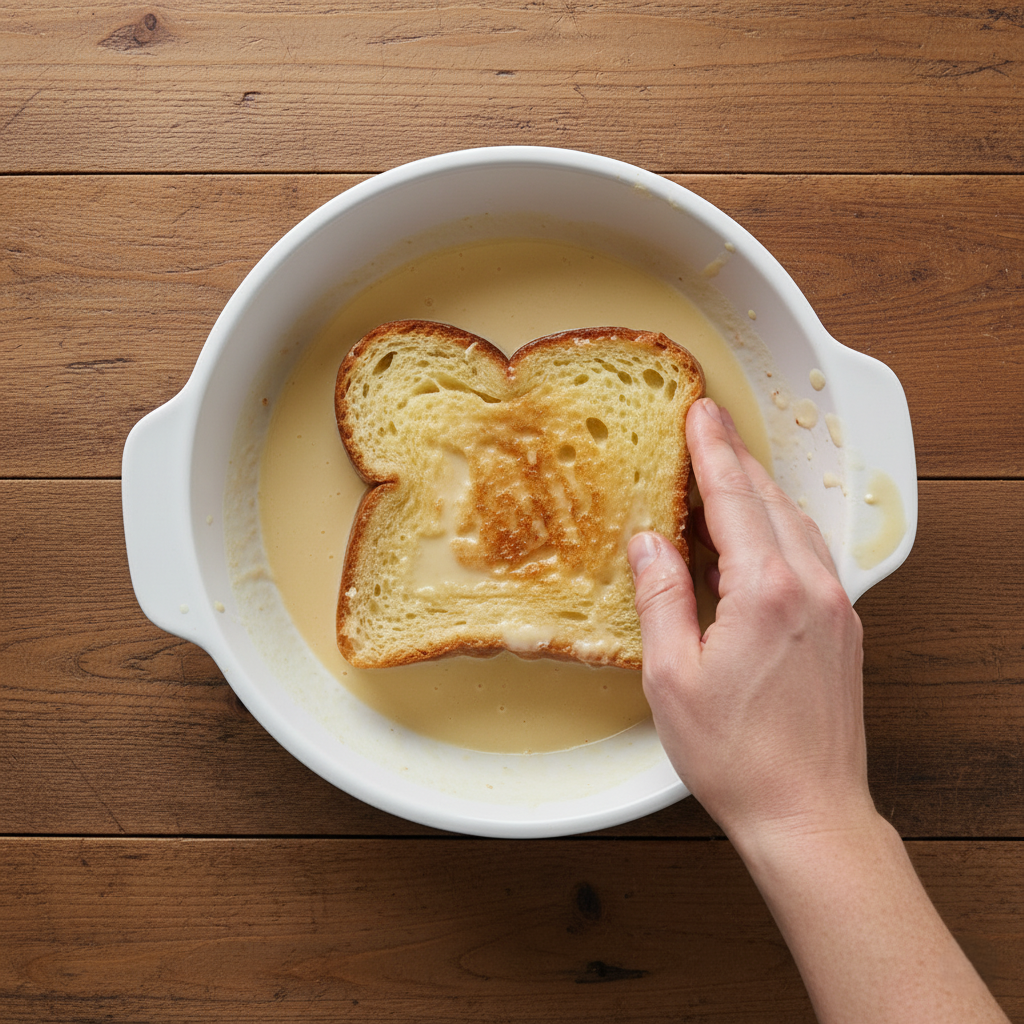
Pour prepared custard into shallow 9×13-inch baking dish or large pie plate. Cut 4 thick bread slices to uniform 3/4-1 inch thickness. Place first slice in custard, press gently 5 seconds, flip, press again 15-20 seconds total soak time per side. Bread should feel heavy and saturated with visible custard pull but maintain structural integrity without disintegrating. Repeat with remaining slices, working quickly to prevent overabsorption. Let excess drip briefly before cooking.
Step 3: Cook the French Toast
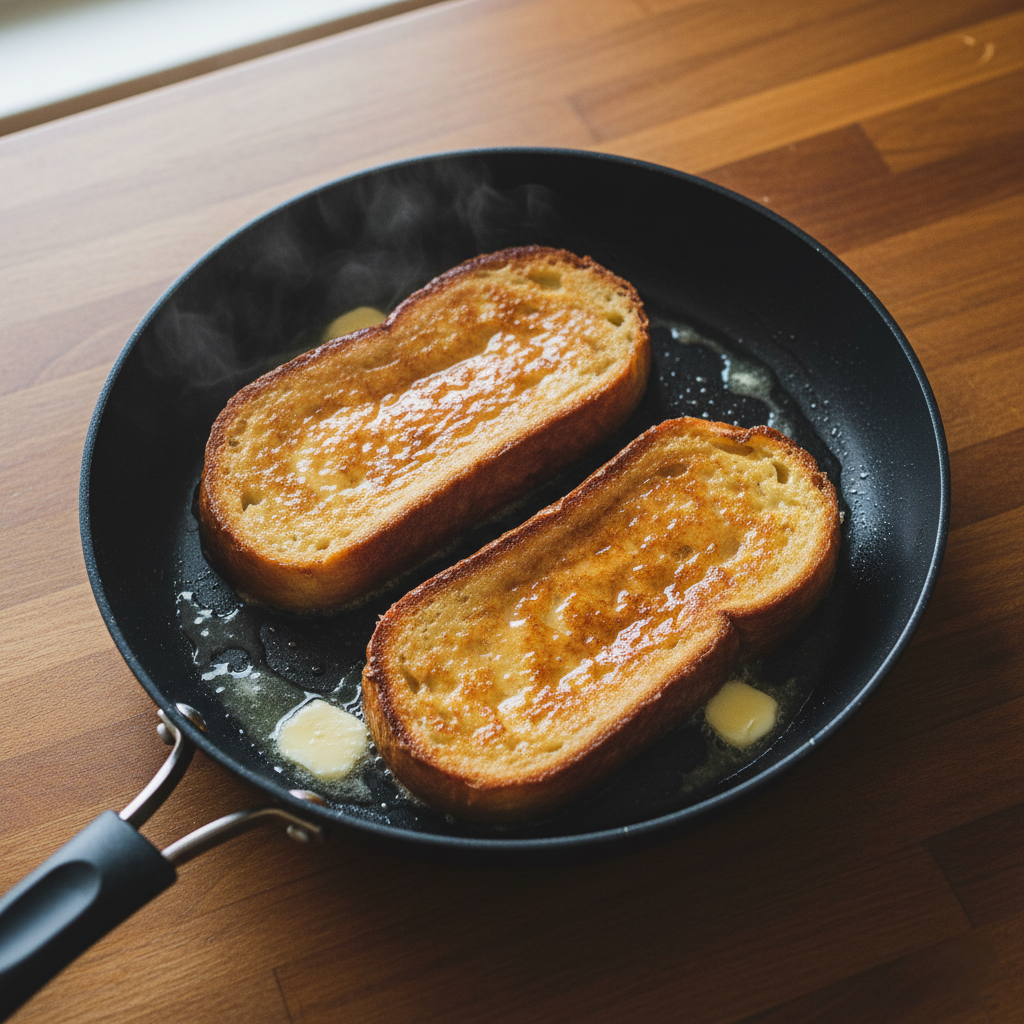
Preheat 12-inch nonstick skillet over medium-low heat 2 minutes until warm (not smoking). Add 1 tbsp unsalted butter, tilt to coat entire surface evenly as it melts and foams. Place soaked bread slices in skillet without crowding (2-3 max). Cook undisturbed 2.5-3 minutes until deep golden crust forms and edges crisp. Gently lift edge—if sticks, cook 30 seconds more. Flip confidently with thin spatula, add 1/2 tbsp butter to pan, cook second side 2-2.5 minutes until equally golden. Remove to warm plate.
Step 4: Serve and Enjoy
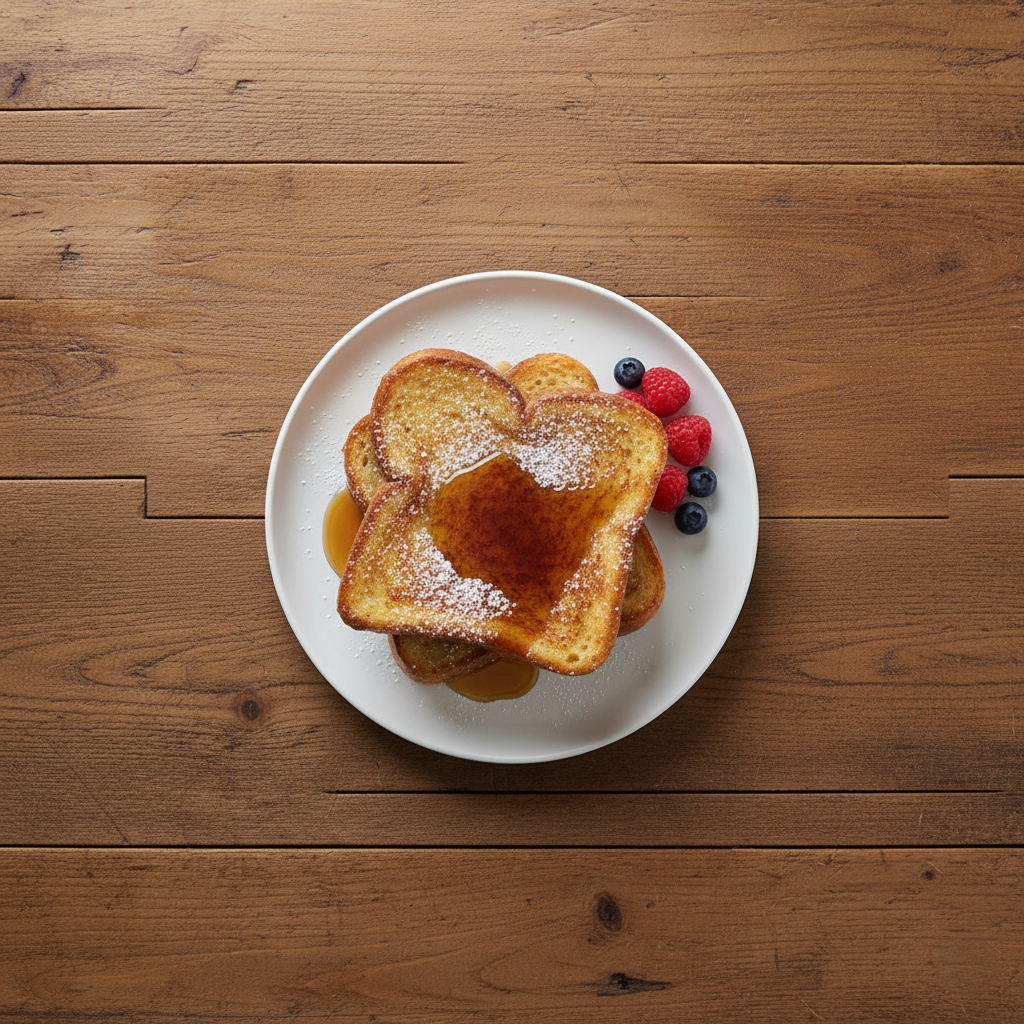
Serve French toast immediately while piping hot for maximum crispness. Stack 2 slices per plate, drizzle generously with warm pure maple syrup allowing it to pool in tender crevices. Scatter fresh berries (strawberries, blueberries, raspberries) for juicy contrast, dust with powdered sugar using fine mesh strainer for even coverage. Optional: whipped cream dollops, crispy bacon strips, or breakfast sausage links create complete indulgent plates everyone craves.
Pro Tips for Perfect French Toast
- Use day-old or slightly stale bread—it absorbs custard better without falling apart during cooking.
- Whisk custard vigorously 60+ seconds for complete fat/protein emulsion preventing separation.
- Medium-low heat (not medium!) ensures centers cook through while exteriors achieve perfect goldeness.
- Elevate flavor: Add 1/2 tsp orange/lemon zest or pinch nutmeg/fresh grated for special occasions.
Serve with
Warm pure maple syrup poured tableside + soft cultured butter pats melting into steam vents. Fresh seasonal berries macerated in sugar create juicy pools. Homemade whipped cream (heavy cream + powdered sugar + vanilla whipped to soft peaks) dolloped generously. Complete the plate with crispy bacon strips or breakfast sausage patties for salty contrast against sweet French toast perfection.
FAQs
Q: What’s the best bread for French toast?
A: Brioche and challah reign supreme—their high butter content and airy crumb structure soak up custard luxuriously while maintaining integrity. Slightly stale day-old sandwich bread works beautifully as budget-friendly alternative.
Q: Can I make the custard ahead?
A: Absolutely—whisk up to 24 hours early, cover tightly, refrigerate. Stir vigorously before use as ingredients naturally separate. Pro tip: scale up for batch cooking multiple breakfasts.
Q: Why use extra egg yolks?
A: Additional yolks (1 extra per 4 slices) create richer lecithin emulsion for superior custard texture and golden browning through increased fat content and Maillard reaction precursors.
Q: What thickness should I slice the bread?
A: Optimal 3/4-1 inch thickness provides structure for flipping while allowing deep custard penetration. Thinner tears easily; thicker requires longer low-heat cooking.
Q: Can I bake French toast instead of pan-frying?
A: Yes! Preheat 400°F oven, place soaked slices on parchment-lined sheet, bake 15-20 minutes flipping halfway. Brush with butter midway for crispness. Perfect for crowds.
Q: What if my French toast tastes too eggy?
A: Reduce eggs by 1/2 or increase milk ratio slightly. Most common cause: oversoaking—limit to 20-30 seconds per side maximum. Add splash orange juice for brightness.
Q: How do I keep French toast warm for a crowd?
A: Position wire rack over baking sheet in 200°F (90°C) oven—circulating hot air prevents sogginess unlike stacking. Hold maximum 20 minutes before peak crispness fades.
Q: Can I soak the bread ahead for convenience?
A: Perfect make-ahead strategy! Soak slices, arrange in single layer on parchment-lined tray, cover tightly, refrigerate overnight. Cook straight from cold for breakfast ready in 7 minutes.