
Master restaurant-quality golden, shatteringly crisp chicken skin enveloping succulent, herb-perfumed meat throughout—this foolproof classic roasted chicken recipe transforms Sunday dinners into memorable events or yields impressive meal prep that feeds families for days. A transformative compound herb-butter rub gets strategically massaged beneath the skin for deep flavor penetration while high-heat roasting engineering creates the holy grail textural contrast of crackling exterior against juicy, tender interior. No complicated trussing, brining, or advanced techniques required—just precise temperature staging, strategic butter placement, and proper resting for jaw-dropping, sliceable perfection every single time.To truly round out this Sunday feast, you need the perfect side dish. We recommend pairing this bird with our Best Green Bean Casserole from Scratch for a combination of textures that defines comfort food.
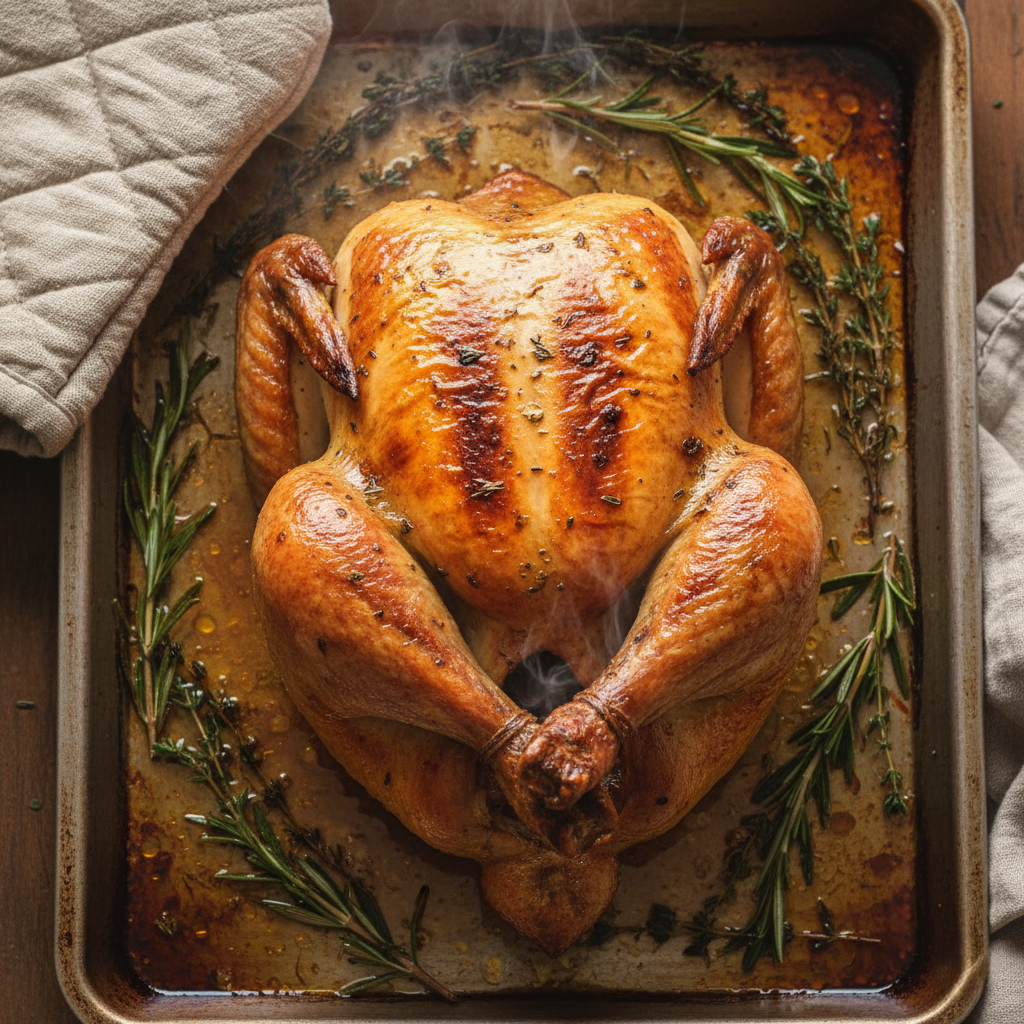
Table of Contents
Why This Recipe Works
The genius two-stage roasting method begins with a blistering 425°F blast that rapidly renders subcutaneous fat while building deep Maillard browning compounds for unmatched skin crispness, then drops to 375°F for gentle finishing that preserves breast moisture while perfectly cooking dark meat. Compound herb butter—masterfully layered beneath AND atop skin—melts gradually during roasting to continuously baste meat while releasing lemony-thyme-garlic perfume through every fiber. Critical 10-15 minute resting period allows 30% of redistributed juices to settle back into muscle structure instead of spilling catastrophically onto cutting board, ensuring supermarket-carver results. Skip intimidating trussing entirely—natural positioning plus rack elevation creates optimal hot air circulation for textbook even cooking without breast drying or thigh undercooking.Beyond the culinary technique, roasting a whole bird is a smart nutritional choice. It maximizes the Lean protein density in skinless poultry without adding excessive unhealthy fats, provided you go easy on the skin.
Ingredients
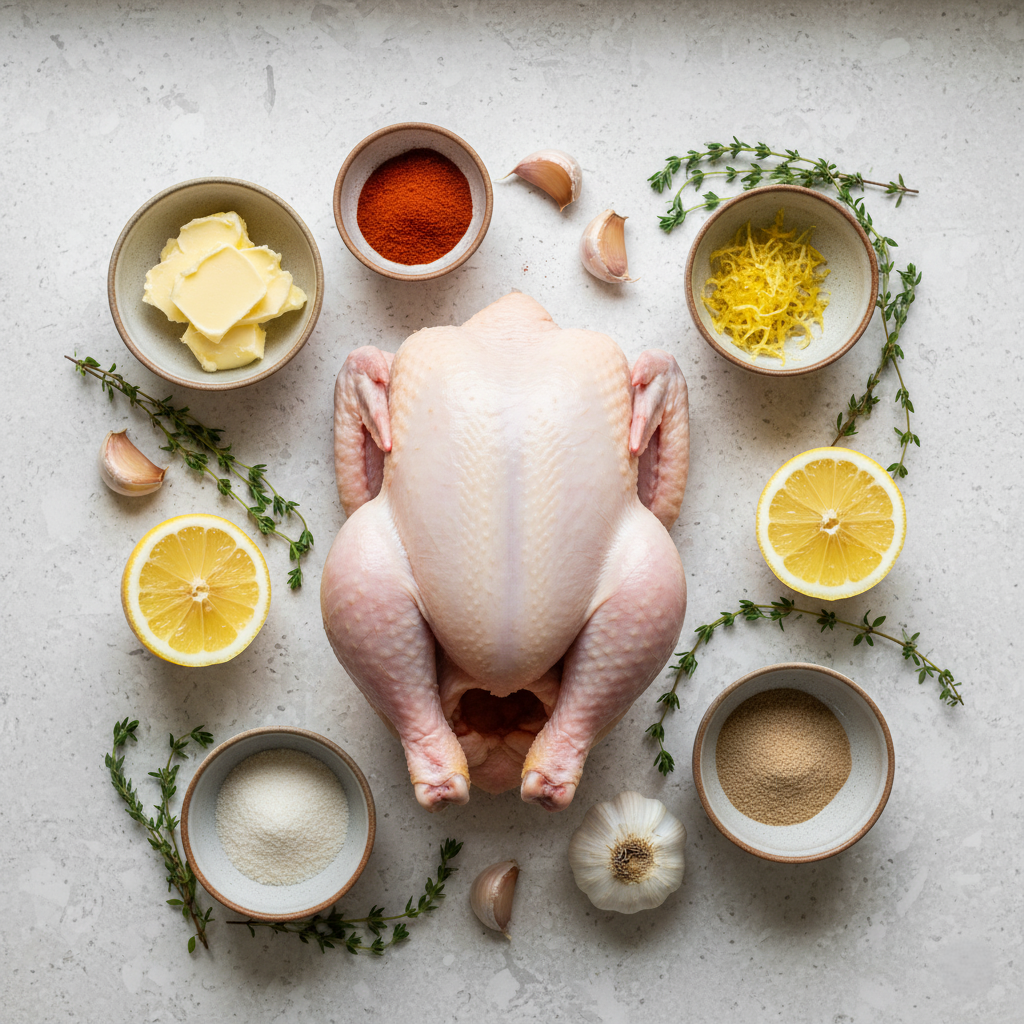
- 1 whole chicken (4–5 pounds), giblet-free, patted obsessively dry with paper towels inside cavity and out
- Kosher salt and freshly cracked black pepper (generous applications for flavor penetration)
Herb-Butter Rub
- 4 tablespoons unsalted butter, softened to room temperature (European-style preferred for higher fat content)
- 1 teaspoon garlic powder (or 2 fresh minced cloves for brighter punch)
- 1 teaspoon onion powder (deepens savory backbone)
- 1 teaspoon dried thyme leaves (or 1 tbsp fresh minced)
- 1 teaspoon sweet paprika (adds color and subtle smoke)
- Fine zest of 1 medium lemon (microplane for maximum aromatic oils)
Aromatics
- 1 lemon, halved crosswise (room temperature releases more juice/steam)
- 4 plump sprigs fresh thyme or rosemary (or mixed for complexity)
- 4 garlic cloves, gently smashed with knife side (releases oils without bitterness)
Equipment Needed
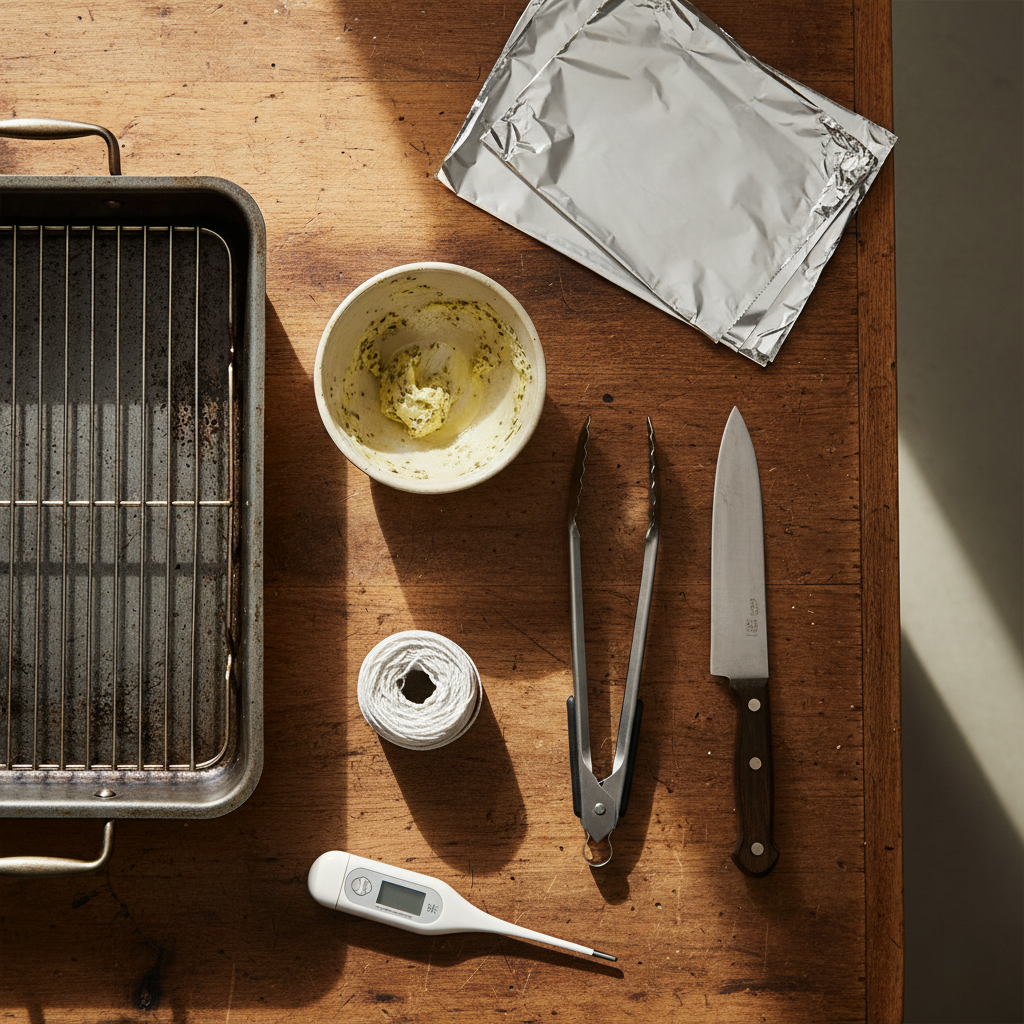
- Heavy roasting pan with wire rack (or preheated cast-iron skillet)
- Instant-read digital meat thermometer (essential for perfect doneness)
- Small mixing bowl for compound butter creation
- Kitchen twine (optional for leg tuck only)
- Long tongs and sharp carving knife for safe handling
- Heavy-duty aluminum foil for temperature-controlled tenting
Instructions
1. Prep the Chicken
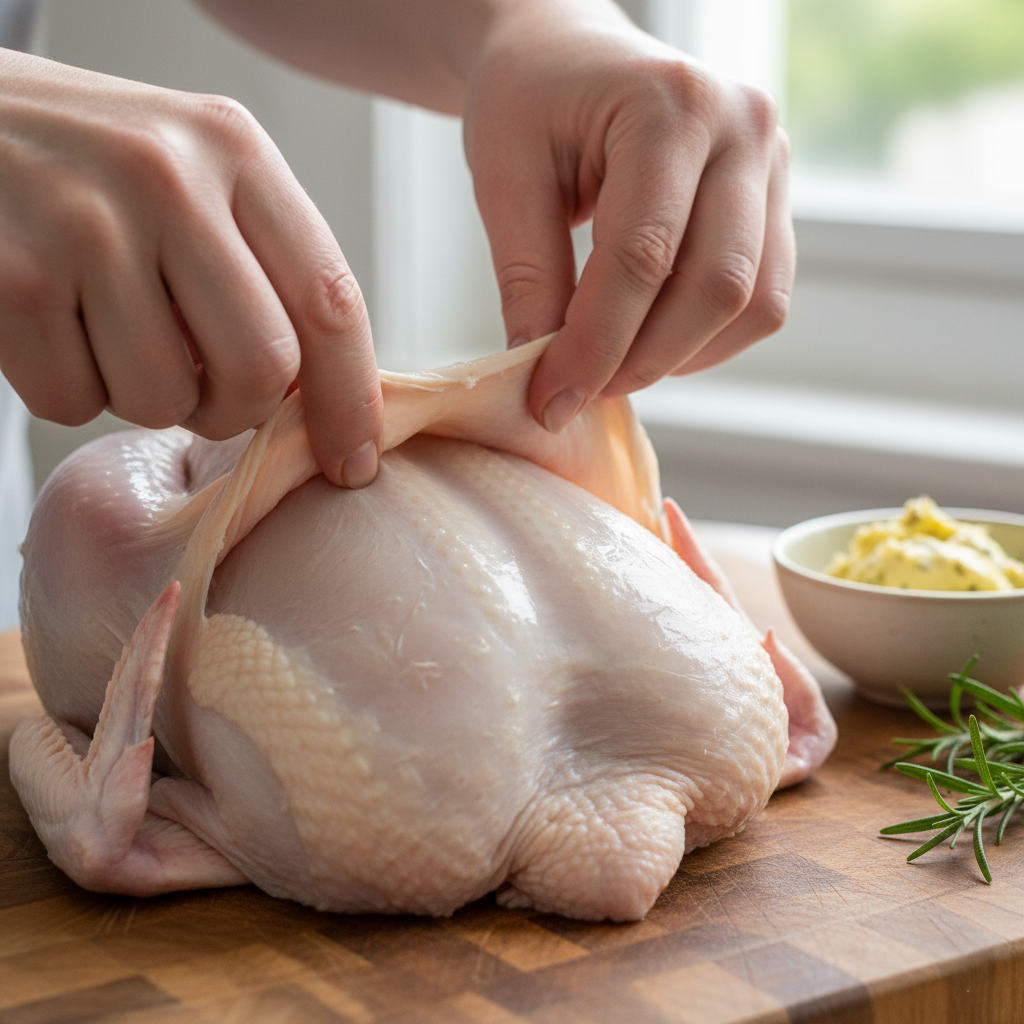
Position oven rack in the lower third and preheat to 425°F (220°C), allowing at least 20 minutes for full oven heat equilibration. Remove chicken from packaging, discard giblets and neck (or reserve for stock), and pat dry with paper towels inside and out until perfectly moisture-free—this step is critical for achieving irresistibly crispy skin. Tuck wing tips firmly behind the back knuckles or secure with a kitchen twine loop to prevent scorching. Carefully slide fingers between skin and breast meat to separate skin without tearing, creating spacious pockets for the upcoming herb butter infusion. Handle skin gently to preserve natural moisture barriers.
2. Make the Herb-Butter Rub
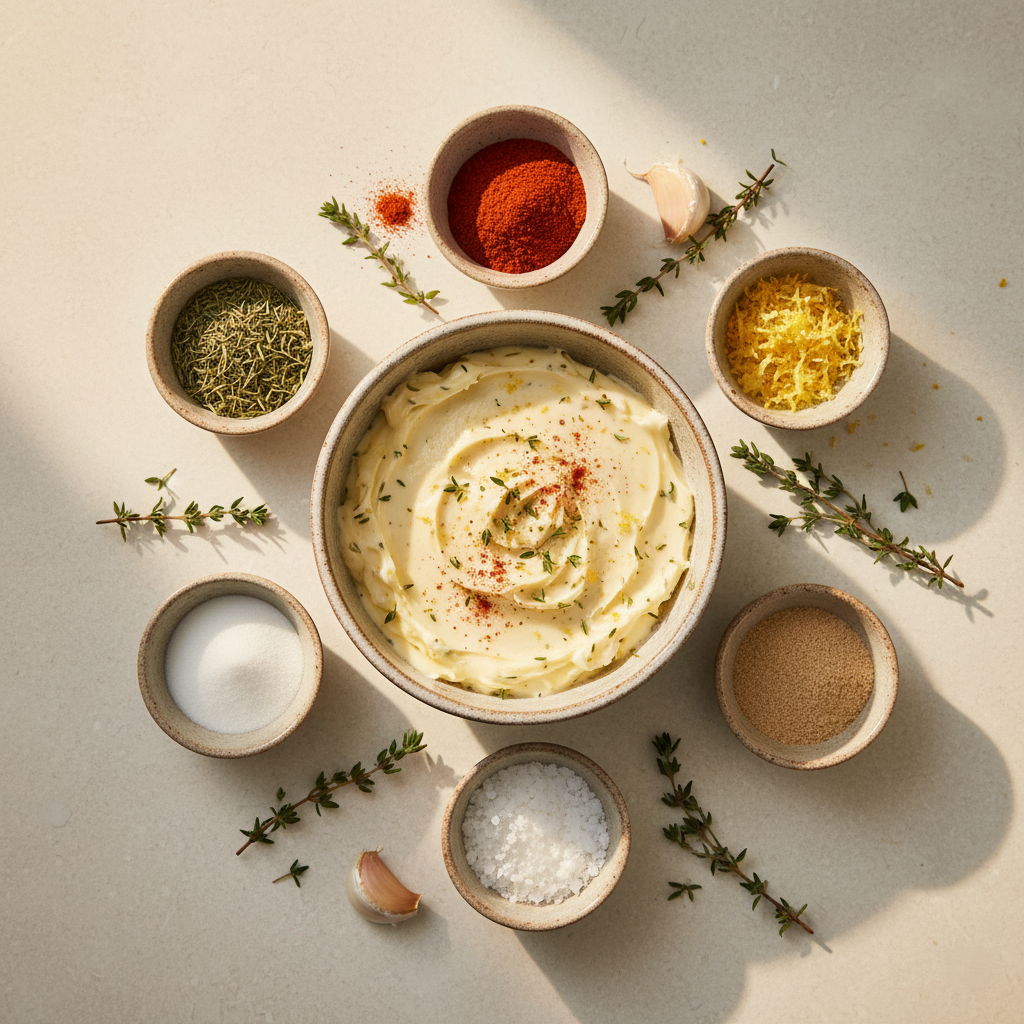
Combine softened unsalted butter, garlic powder, onion powder, dried thyme, sweet paprika, finely grated lemon zest, kosher salt, and freshly cracked black pepper in a small bowl. Use a fork or small spatula to whip until the mixture is perfectly smooth and emulsified, resembling a luxurious, aromatic paste. Adjust seasoning balance if desired—this compound butter is the flavor foundation locking in moisture and infusing herbal brightness throughout every bite.
3. Season the Chicken
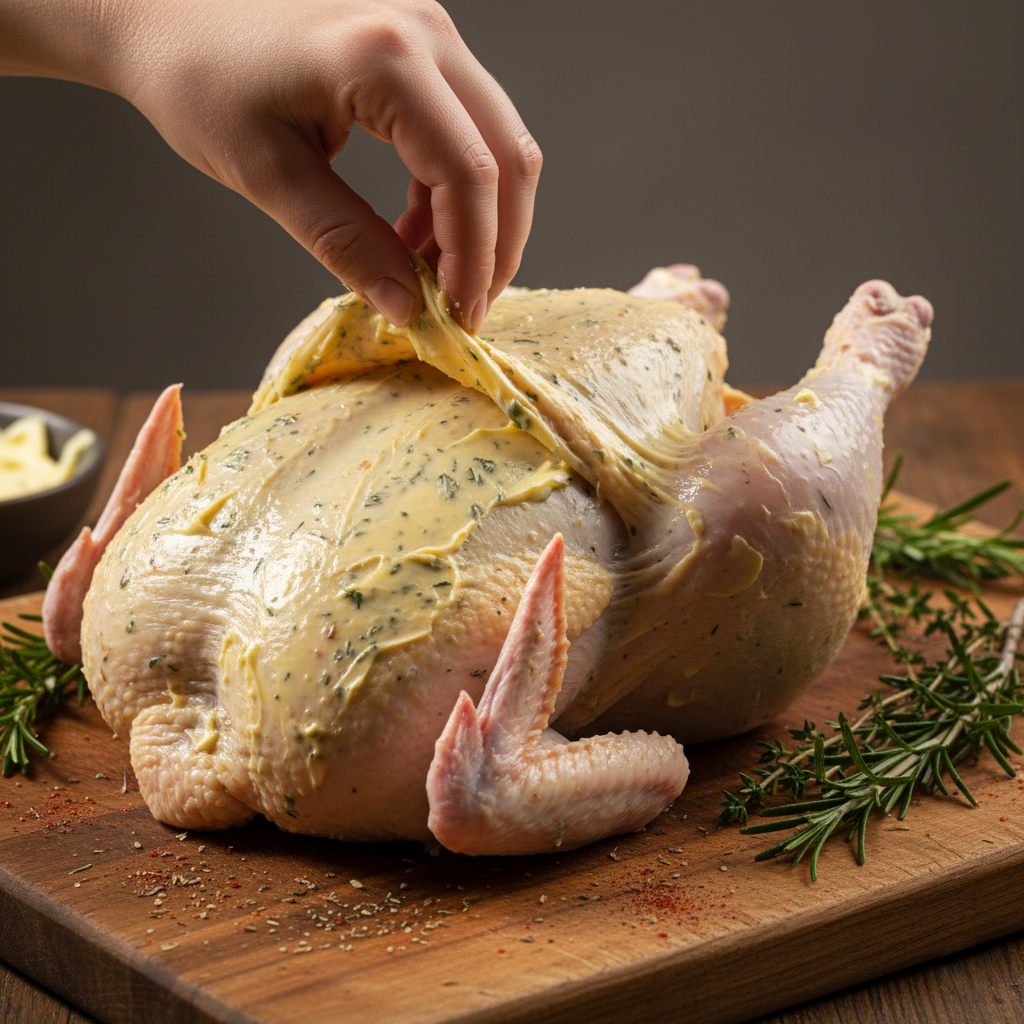
Gently spread half the herb-butter mixture under the loosened skin pockets over breasts and thighs, massaging thoroughly to ensure even coating without tearing skin. Next, slather the remaining butter mixture evenly across the entire chicken skin exterior, sealing moisture and creating the base for crisp, golden textures. Stuff the fragrant lemon halves, fresh thyme or rosemary sprigs, and smashed garlic cloves deeply inside the cavity, distributing aromatics evenly for intense fragrance. Finish with a light sprinkle of salt and pepper inside the cavity for balanced seasoning depth.
4. Roast the Chicken
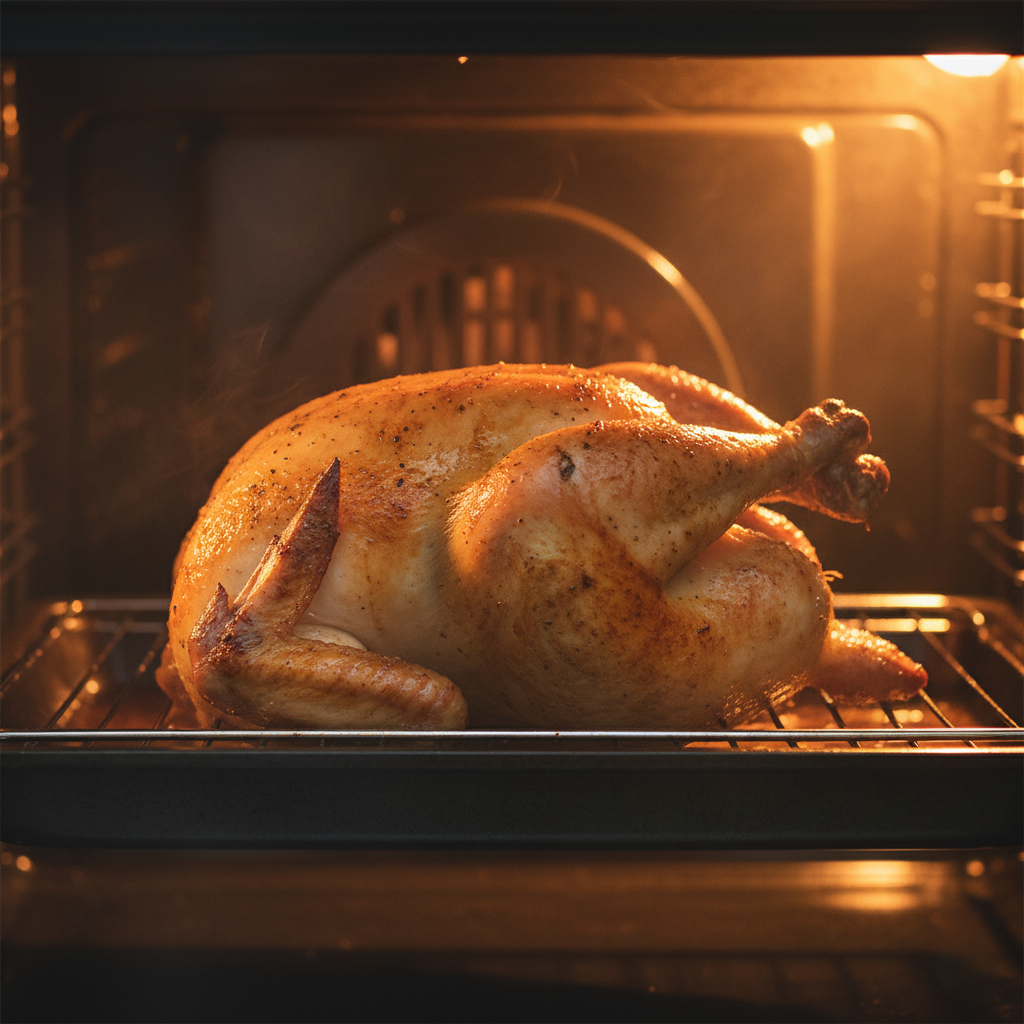
Place the prepared chicken breast-side up on a wire rack set inside a heavy roasting pan or cast-iron skillet preheated in the oven for additional crispness. Begin roasting at 425°F (220°C) for 15 minutes to rapidly render fat and brown the skin surface. After this initial high-heat blast, reduce the oven temperature to 375°F (190°C) and roast for an additional 60 minutes to tenderize meat evenly without drying. Rotate the pan 180 degrees halfway through roasting to ensure even golden color development. Monitor skin closely—if it browns too quickly or threatens to burn, tent the bird loosely with a sheet of heavy aluminum foil to prevent overbrowning while allowing internal temperature to rise steadily.
5. Check for Doneness
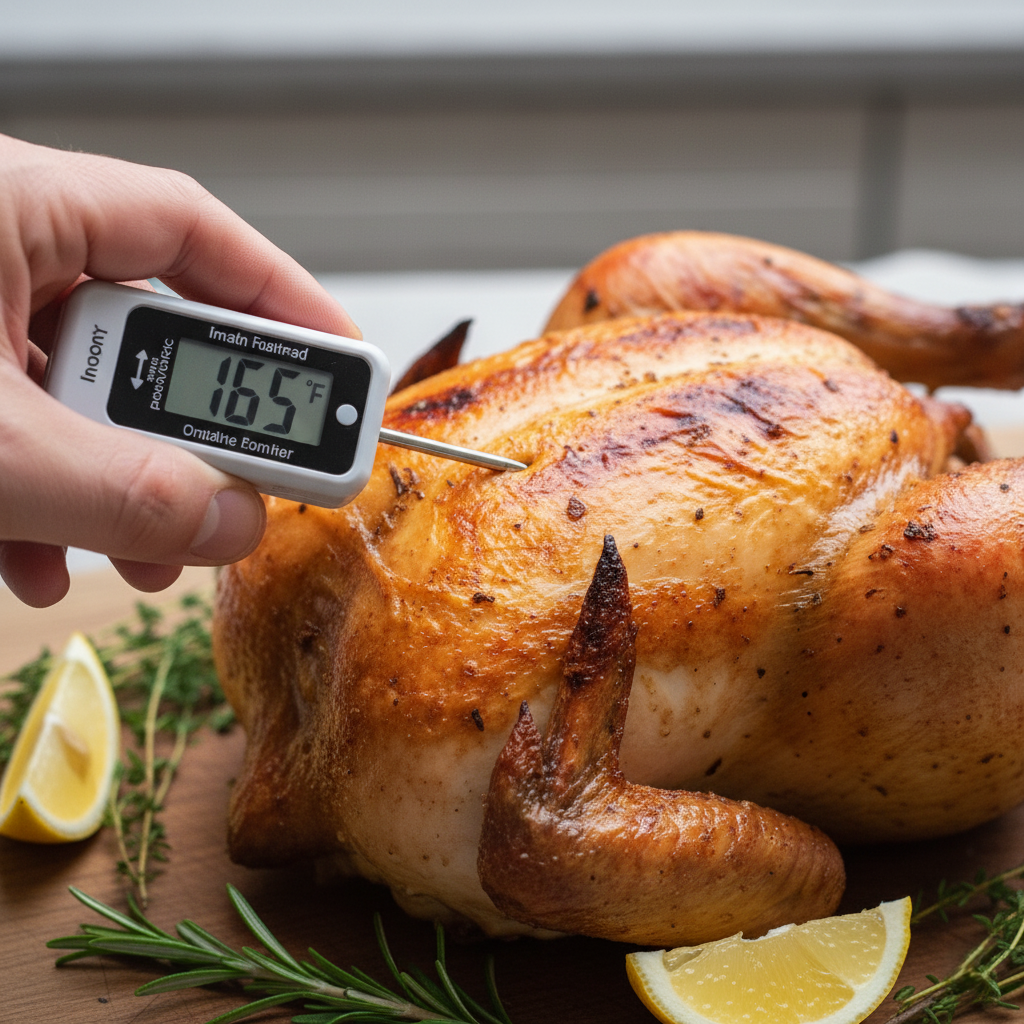
Using an instant-read digital thermometer, carefully probe the thickest part of the thigh without touching bone, aiming for a safe internal temperature of 165°F (74°C). If the breast registers 155°F earlier, shield it with foil to prevent overcooking and continue roasting to ensure thighs reach safe temperature while staying juicy. Remove the chicken from the oven once the proper temperatures are reached throughout all muscle groups for absolutely moist, tender meat with perfectly crispy skin.
6. Rest and Carve
Transfer the piping hot chicken to a large cutting board. Loosely tent it with heavy-duty aluminum foil and allow to rest undisturbed for 10-15 minutes. Resting is critical as it allows muscle fibers to reabsorb and redistribute cooking juices, resulting in moist, tender meat and reducing slicing moisture loss. Carve methodically, starting by removing legs and thighs with a sharp boning knife or poultry shears, followed by wings. Slice the breast meat against the grain into even pieces for best tenderness and presentation.
How to Get Extra-Crispy Skin
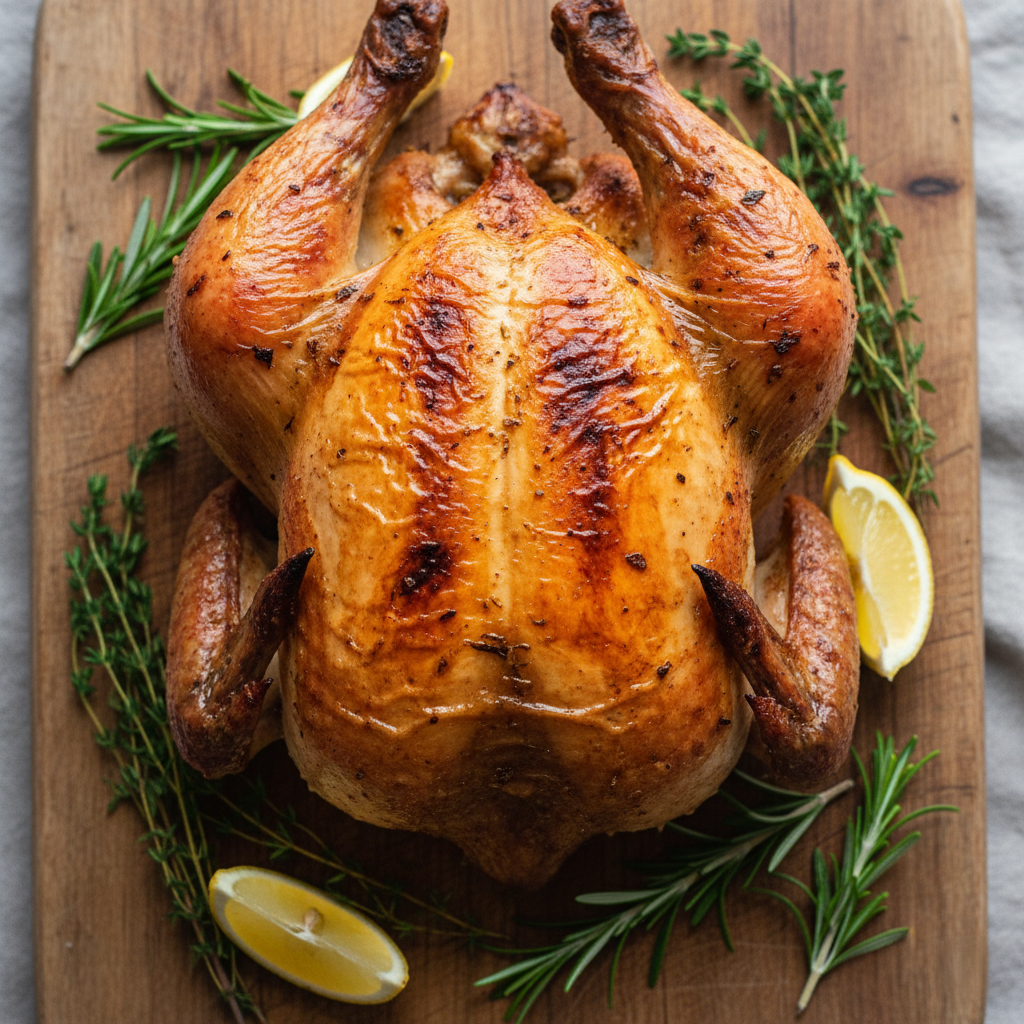
Perfectly crispy skin starts well before the oven. Pat the chicken skin completely dry with paper towels and avoid squirting wet marinades or oil all over the skin afterward—that traps moisture and inhibits crisping. The compounding of herb butter under and over skin creates a flavorful moisture barrier while promoting ultra-crisp browning. The initial high heat blast rapidly renders fat and encourages Maillard browning that develops delicious complexity and crunch. Ensure good air circulation and don’t overcrowd the roasting vessel.
Flavor Variations
- Add a punchy lemon-garlic paste or North African harissa into the butter rub for a spicy, exotic twist.
- Mix finely chopped fresh herbs such as sage, tarragon, or marjoram into the butter for layered earthy complexity.
- Swap sweet paprika with smoked paprika to impart luscious smoky undertones reminiscent of BBQ.
- For Asian-inspired flavors, replace herb butter with a blend of soy sauce, toasted sesame oil, and freshly grated ginger under the skin.
Make-Ahead Tips
For exceptional skin crispness and flavor development, apply the herb butter rub and season the chicken liberally in advance, then refrigerate uncovered on a rack for 12 to 24 hours. This extended air-drying period enhances skin texture and intensifies aromas. When ready to roast, remove chicken directly from fridge and proceed without tempering. Leftovers store beautifully in airtight containers refrigerated up to 4 days; reheat gently to preserve crispness or shred cold for flavorful sandwiches, salads, or wraps.
Serve With
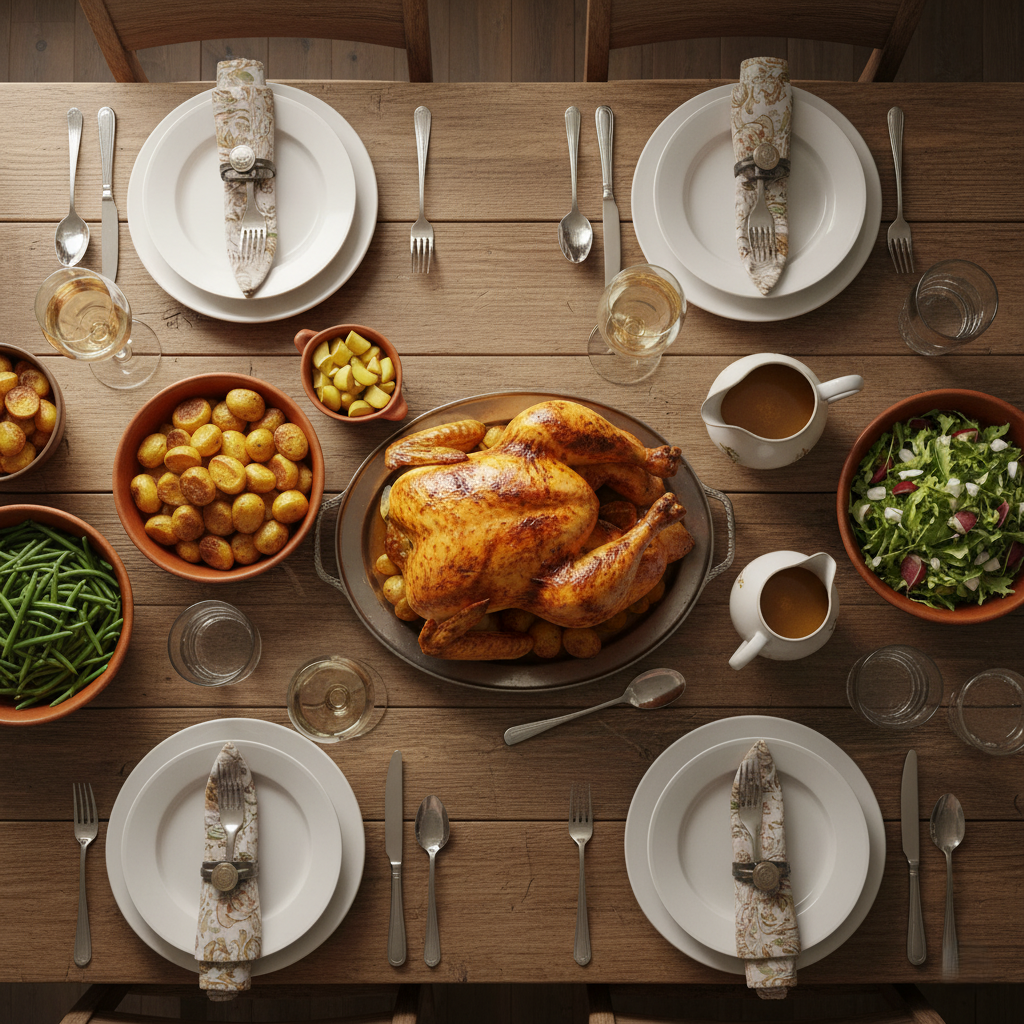
Pair this roasted chicken centerpiece with classic golden roast potatoes and buttered green beans for traditional comfort fare. Alternatively, create a lighter plate by serving atop mixed greens drizzled with fresh lemon vinaigrette. Utilize flavorful pan drippings by deglazing the roasting pan with white wine or stock and reducing into a simple gravy or jus to accompany slices for restaurant-quality finishing.
Quick FAQ
- Can I spatchcock this chicken?
Absolutely! Flattening the chicken removes about 30% of cooking time by exposing all skin simultaneously to heat, leading to even crisping and supremely juicy meat. - Why should I let chicken rest?
Resting traps and redistributes juices back into muscle fibers so meat remains moist and tender rather than drying out or pooling on your cutting board. - Which pan works best?
A shallow roasting pan with wire rack elevates chicken, ensuring hot air circulates for crisp skin. Oven-safe cast-iron skillets also deliver excellent heat retention and browning. - How do I reheat leftovers?
Reheat in a 350°F oven uncovered on a rack for about 15–20 minutes to restore skin crispness. Avoid the microwave to prevent soggy textures. - Can I roast at a lower temperature?
You can roast at 350°F for more even cooking but will lose some skin crispness and need to add 15–20 minutes more cook time.
Conclusion
There is a reason this recipe has stood the test of time. It delivers everything you want in a home-cooked meal: aroma, flavor, and the Lean protein density in skinless poultry that fuels your family for the week ahead.
Don’t let the oven do all the work just for the main course. Slide in a dish of our Best Green Bean Casserole from Scratch alongside the chicken, and you’ll have a dinner spread that looks like it came straight out of a magazine.

